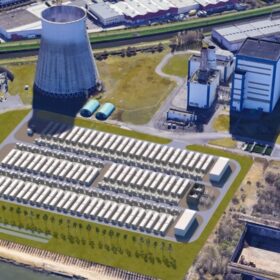
Engie breaks ground on 800 MWh battery in Belgium
Once completed, the four-hour battery energy storage project will operate under a 15-year contract with Elia, Belgium’s electricity grid operator, and be located next to Engie’s gas power plant in Vilvoorde.
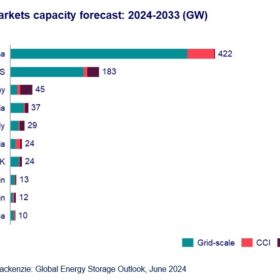
Global energy storage fleet to surpass 1 TW/3 TWh by 2033, WoodMac says
According to the latest forecast from Wood Mackenzie, the global energy storage market (excluding pumped hydro) is on track to reach 159 GW/358 GWh by the of 2024 and grow by more than 600% by 2033, with nearly 1 TW of new capacity expected to come online.
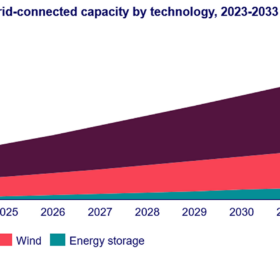
WoodMac predicts 3.8 TW of new solar by 2033
Wood Mackenzie says that solar will account for 59% of new renewables between 2024 and 2033. China is expected to drive the growth, accounting for half of new solar deployment over the projected time period.
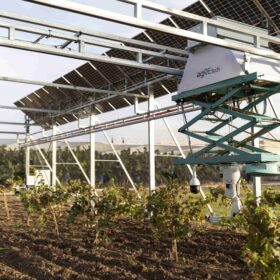
EDF invests in Israeli robotic agrivoltaics startup
AgRE.tech, which is developing a robotic operating system for existing photovoltaic infrastructure, has raised $2 million from EDF and Zemach Regional Industries. The company says it will soon set up commercial fields.
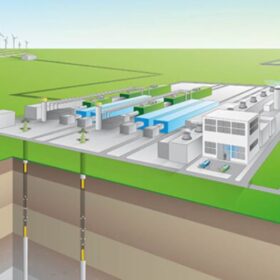
320MW/640MWh battery to complement compressed air storage project in the Netherlands
The battery development should monetise excess grid capacity and complement the 320 MW compressed air energy storage project developed by Groningen-based long duration energy storage specialist Corre Energy.
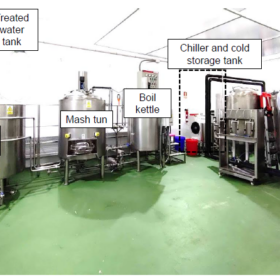
Solar for small-scale brewing
Researchers in Spain have investigated the potential of using photovoltaic (PV) or photovoltaic-thermal (PVT) systems in microbreweries and have found that PVT systems can cover more energy demand but have a longer payback time.
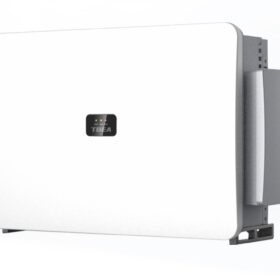
TBEA launches new 1,500 V string inverter
TBEA has developed a new 1,500 V string inverter with a maximum efficiency of 99.02%, maximum power point tracking (MPPT), a maximum input current of 65 A, and a maximum short circuit current of 115 A.
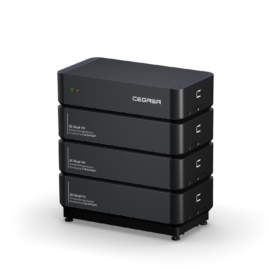
Cegasa presents new modular, scalable battery for C&I applications
The new EScal HV offers installations of between 17 kWh and 350 kWh using a stackable system that allows up to 15 modules to be placed in series, and four strings in parallel.
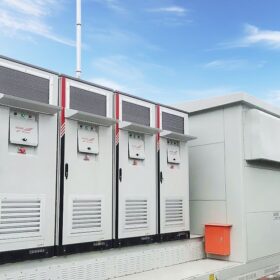
World’s first grid-scale, semi-solid-state energy storage project goes online
The 100 MW/200 MWh energy storage project featuring lithium iron phosphate (LFP) solid-liquid hybrid cells was connected to the grid near Longquan, Zhejiang Province, China.

How to make seaports into energy communities with PV, wave energy
Researchers have simulated the operation of seven renewable energy communities in the Port of Naples and found them to offer lower life cycle costs. Using varying capacities of solar and wave energy, they were able to optimize the system to a 90% self-consumption rate. They also offered a scheme for the management of a port energy community.
