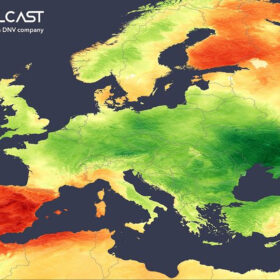
Low pressure impacted Europe PV production in April
In a new weekly update for pv magazine, Solcast, a DNV company, presents the solar irradiance data it collected for Europe in April. These data show that Spain benefitted from solar irradiance 20% to 30% above average during the last month, while in the rest of Europe irradiance was below average.
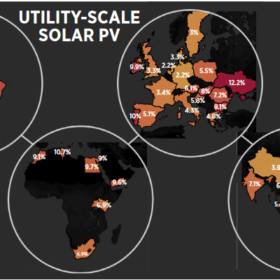
Germany, Netherlands and Sweden have lowest cost of capital for utility scale PV
The International Renewable Energy Agency (IRENA) has released new data on the cost of capital for solar PV, onshore and offshore wind in the period between 2020 and 2021. Results show that Germany and the Netherlands have the lowest cost of capital in Europe at 2.2%, while the United States, China, India, and Australia show values of 5.4%, 3.9%, 7.1%, and 4.6%, respectively.
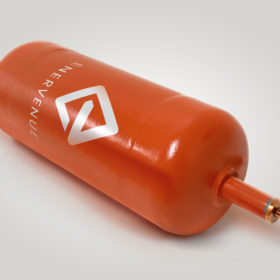
EnerVenue completes metal-hydrogen battery safety testing
Unlike lithium-ion battery cells, EnerVenue’s nickel metal-hydrogen technology showed no fire propagation during induced thermal runaway in UL battery safety testing.
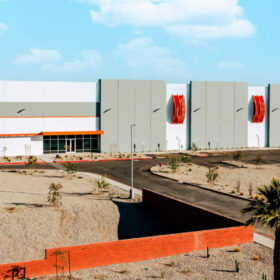
Ikea bets on Meyer Burger’s heterojunction solar modules
Between 2025 and 2029, the investment company of the Swedish furniture group will purchase solar modules produced in the US by the Swiss photovoltaic manufacturer. The agreement is the basis for Meyer Burger to increase annual production capacity at its Arizona site to around 2 GW.

Mapping of green hydrogen projects in Brazil
A mapping of green hydrogen projects in Brazil shows that there are at least 42 projects under various stages of development in the country.
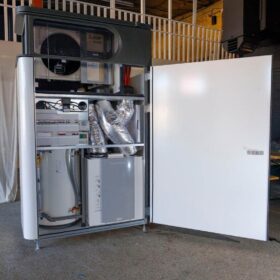
Netherlands exempts apartments and monuments from 2026 heat pump mandate
The government of the Netherlands has backtracked on its decision to implement a sweeping hybrid heat pump obligation from 2026. Multi-story apartment buildings and listed buildings will be exempted.

Chile has 231 MW of storage under construction, PV capacity tops 8.2 GW
As of the end of March, Chile had 4,748 MW of PV projects under construction, 19,832 MW of solar projects approved, and another 4,660 MW under review.
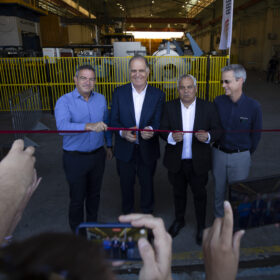
Brenmiller switches on 4 GWh rock-based thermal energy storage system factory in Israel
Brenmiller secured a €7.5 million ($8.2 million) credit facility from the European Investment Bank (EIB) to build the factory.
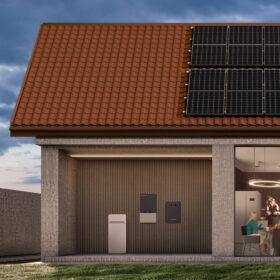
LG unveils US residential energy storage system
LG has developed a new energy storage system for the US residential market that combines two 10-hour batteries or 16-hour Prime battery modules in parallel, providing 19.2 kWh to 32 kWh of capacity and a maximum 9.6 kW output from the inverter.
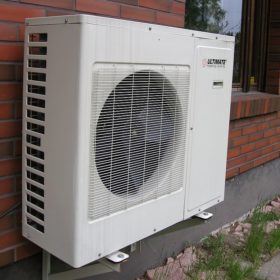
EU releases strategy for heat pump rollout
The European Commission has opened a call for evidence on its plan to accelerate heat pump roll-out across the European Union. It is asking citizens and businesses for feedback on four strands of action, focusing on financing, legislation, skills, research and innovation. The call for feedback is open until May 26.
