
New air-to-water heat pumps from Italy
Italian manufacturer Thermocold is offering new heat pumps with output ranging from 8 kW to 30 kW. They use propane as the refrigerant and reportedly have a seasonal coefficient of performance of up to 4.5.

New model to predict defrost cycles, behavior of air-sourced heat pumps in cold weather
UK-based researchers have developed a novel method to estimate the amount of defrost cycles a heat pump will experience in the winter and how much energy it would require to implement the cycles. The results of their simulation showed a strong relationship between the number of defrost cycles and the ambient temperature.
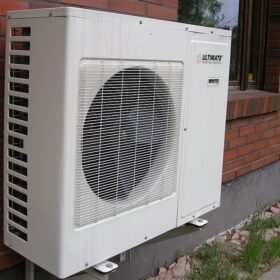
Up to 1,150 families sign up for UK heat pump scheme
The UK Department for Energy Security and Net Zero says the latest round for its Boiler Upgrade Scheme – an initiative awarding GBP 7,500 ($9,500) to families in England and Wales to replace traditional boilers for heat pumps – “surged” with a threefold increase in applications.
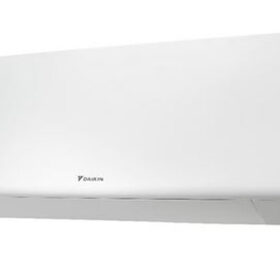
Daikin unveils series of residential air-to-air heat pumps
Daikin has released a line of residential air-to-air heat pumps, using difluoromethane (R32) as the refrigerant, with outdoor unit dimensions of 662 mm x 442 mm x 1022 mm. The output ranges from 2.5 kW to 3.5 kW, and the seasonal coefficient of performance (SCOP) is between 4.85 and 5.17.
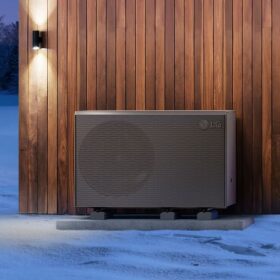
LG launches residential air-to-water propane heat pump
The new product utlizes propane refrigerant with a lower global warming potential and has a seasonal coefficient of performance (SCOP) of over 5. According to the manufacturer, it can achieve a flow temperature of 75 C and 100% heating output at outside temperatures of -15 C.
Performance parameters for residential heat pumps linked to PV, storage
German researchers measured a PV-powered heat pump with battery storage in a single-family home in Freiburg, Germany, for a period of a year. It features smart grid-ready tech that adjusts operations based on the grid.
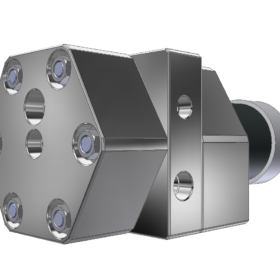
Infinite Turbine debuts heat pump turbine for homes, businesses
Infinite Turbine has developed a heat pump turbine for residential and commercial applications, using PV or alternative electricity sources for simultaneous cooling and hydraulic power. The tech can be retrofitted with existing CO2 heat pump systems for air conditioning, hot water, and process heat.
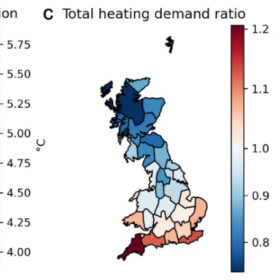
High-resolution model to identify hourly usage patterns of residential heat pumps
Developed by scientists from the UK and Spain, the new model uses high spatiotemporal resolution weather data and data from heat pump field trials. It finds “significant regional differences” compared to a British nation-wide estimation.
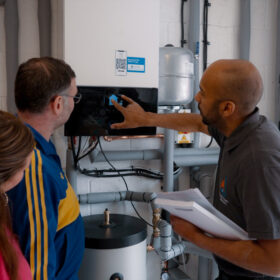
EDF acquires CB Heating
EDF has purchased UK heat pump installer CB Heating for an undisclosed sum.
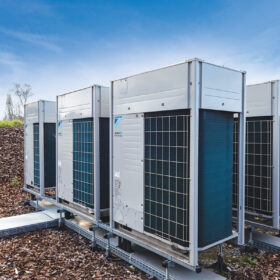
Daikin lauches new air-to-air heat pumps
Intended for applications in commercial buildings, the new VRV 5 heat pumps have reportedly a 9.1% higher seasonal efficiency compared to the company’s previous models. The new products use difluoromethane (R32) as the refrigerant.
