
UK researchers build two-electrode photoelectrochemical device with 5% solar-to-hydrogen efficiency
A research team from two London universities have developed a multi-layer device that addresses the instability of organic materials in water to further their use in direct solar hydrogen generation. Monolithic tandem anodes fabricated by the team reached a solar-to-hydrogen efficiency of 5%, a record in organic photoelectrochemical device performance.
RWE, TotalEnergies close 15-year hydrogen PPA in Germany
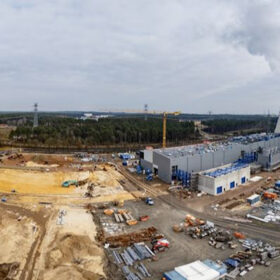
RWE and TotalEnergies have signed a 15-year power purchase agreement (PPA) under which RWE will supply over 30,000 tons of green hydrogen per year to TotalEnergies’ Leuna refinery in Germany from 2030 to 2044.

Caribbean has potential to unlock solar-to-X economy
The Caribbean stands to benefit from low-cost renewable energy solutions, reducing the energy system cost, mitigating climate risks, and driving a clean energy transition. With solar PV as the cornerstone technology, the region is poised to transition to a solar-to-X Economy, leveraging its abundant renewable resources to achieve carbon neutrality.

Bry-Air enters green hydrogen segment with air-to-water generators
Deepak Pahwa, chairman of Pahwa Group and managing director of Bry-Air, tells pv magazine that the company has developed an air-to-water generation prototype for a green hydrogen project in the Indian desert, with plans to scale up to 500 units for large-scale hydrogen production.

ACWA Power building hydrogen bridge between Europe and Middle East, North Africa
In an exclusive interview with pv magazine, ACWA Power CEO Marco Arcelli said the Saudi energy giant is currently exploring opportunities to build a hydrogen corridor between Europe and the Middle East and North Africa. He spoke about the company’s current 2 GW hydrogen project in Neom and presented the company’s plans for renewable energy and desalination.
The impact of PV module orientation, water quality on hydrogen production
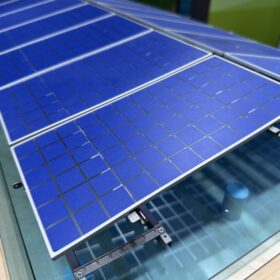
Scientists in Tunisia have investigated the impact of PV panel tilt and water quality on green hydrogen production and have found that, with a variable orientation PV panel, the hydrogen generator could reach an efficiency ranging from 32% to 62% using demineralized water and 45% to 65% with distilled water.
Waaree breaks ground on alkaline electrolyzer factory
Waaree Group has started building an alkaline electrolyzer factory in India. The facility will commence operations with 300 MW of production capacity.
What’s cooking in PV?
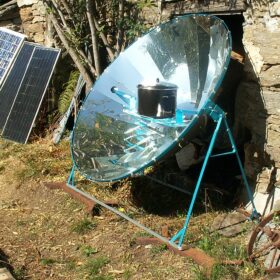
Scientists have conducted an analysis of 20 years of academic publications about PV-powered electric cooking and have found interest in the field peaked in 2021-2022 in both developing and developed countries. They have also outlined some potential future developments.

How to power 4G, 5G cellular base stations with photovoltaics, hydrogen
Scientists have simulated a 4G and 5G cellular base station in Kuwait, powered by a combination of solar energy, hydrogen, and a diesel generator. The lowest cost of energy was found to be $0.0714/kWh.

Solar-driven brine management system for hydrogen, chlorine production
Researchers have developed a novel energy system comprising PVT panels, reverse osmosis, reverse electrodialysis, and proton exchange membranes. The proposed setup can purportedly produce 18.78 kg/day of hydrogen and 120.6 m³/day of freshwater.
