
U.S.-India trade deal reduces solar tariffs
Tariff reductions under the new U.S.-India trade agreement lower import costs for solar modules and energy storage components. Reciprocal tariffs were effectively reduced from 50% to 18%.

India tenders 2.45 GW solar power projects with battery storage
Rajasthan Solar Park Development Co. Ltd. (RSDCL) has issued a tender inviting bids to develop 2,450 MW of state transmission utility (STU)-connected solar PV capacity paired with 1,600 MW/6,400 MWh of battery energy storage systems at the Pugal Solar Park in Rajasthan’s Bikaner district. The projects will be implemented on a build-own-operate (BOO) basis.
India deploys 37.9 GW of solar in 2025
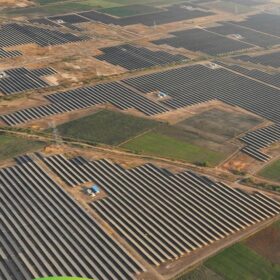
Solar additions in calendar year 2025 comprised 28.6 GW of new utility-scale solar capacity, 7.9 GW of rooftop PV power, and 1.35 GW of off-grid and distributed installations.

Cooling PV modules with seawater
A research team in India developed a passive solar-panel cooling method using a thin, still layer of seawater placed over the module surface. Tests showed that while a thick water layer sharply reduced energy output, a thin 5 mm layer lowered module temperatures and increased daily energy generation by up to 8.86%.
How to balance power losses, cost effectiveness in PV-BESS-driven EV charging stations
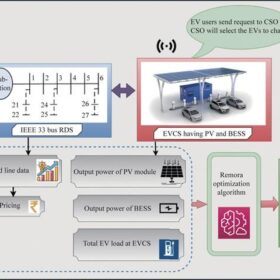
Scientists in India have developed a novel method to optimize the placement of an EV charging station on the grid, along with the size of its PV generation and battery storage. They have also created a framework for an innovative slot offering.

Sodium-ion battery storage for ultra-low temperatures
U.S. researchers have developed a sodium-ion pouch cell that operates reliably at temperatures as low as –100 C. The battery was tested with simulated and real renewable energy sources, including wind and solar, and maintained stable performance in both laboratory and field conditions.
What can South Korea learn from India’s rapid solar deployment?
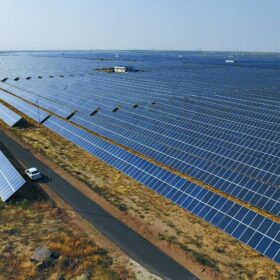
Korean policy analyst focusing on solar power plant siting and permitting, Daun Kim, has reported on her recent trip to India’s Bhadla Solar Park. The analyst highlights how clear siting policies and streamlined permitting helped India scale renewables, something that South Korea can learn as it pursues a 100 GW renewable energy target by 2030.
India installs 18 GW solar in H1 of 2025, says Mercom
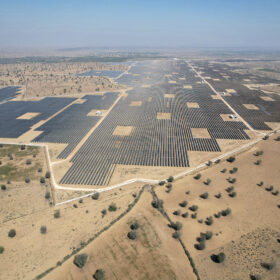
India added 18 GW of new solar power capacity in the first half of 2025, with over 11 GW installed in the second quarter alone.
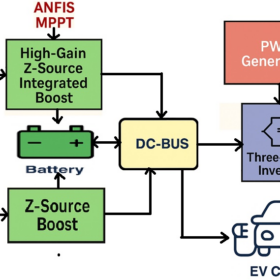
Novel MPPT technique for EV charging combined with PV, fuel cells
Scientists in India have designed a system that uses PV panels, a proton-exchange membrane fuel cell, battery storage, and a supercapacitor. It also relies on an adaptive neuro-fuzzy inference system-based MPPT that reportedly achieves an efficiency of 98.7%.

Sinovoltaics maps emerging PV manufacturing hub in Middle East, Africa
In its inaugural study of the emerging manufacturing hub in the Middle East and Africa, the quality assurance and technical compliance company has mapped 3.4 GW of module, 2.5 GW of solar cell, and 8.05 GW of ingot nameplate capacity across 27 sites.
