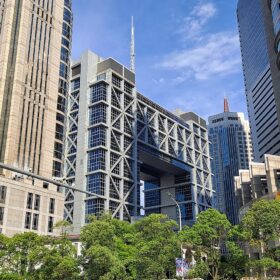
Chinese PV Industry Brief: Tongwei, GoodWe post 2024 losses
Tongwei says it recorded a $969 million net loss for fiscal 2024, while GoodWe posted an $85 million loss and Ginlong’s net profit fell 11.3% to $95 million.
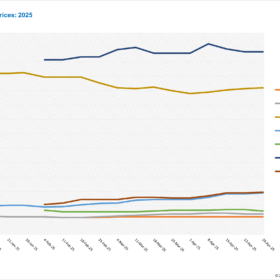
China module prices bearish, U.S. prices rise on tariff policies
In a new weekly update for pv magazine, OPIS, a Dow Jones company, reports that TOPCon modules from China held steady at between $0.085-0.090/W. It also reveals that Europe prices for TOPCon modules of over 450 W rose by 0.96%, assessed at €0.105/W.
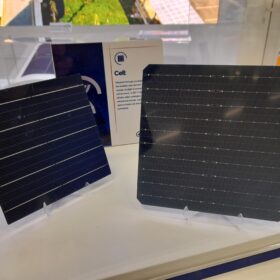
Chinese PV Industry Brief: Polysilicon, solar module prices continue to slide
Polysilicon prices fell again this week amid weak market activity and elevated inventories, according to industry sources. Downstream wafer, cell, and module prices also continued to slide, with modules now trading as low as CNY 0.68 ($0.09)/W.
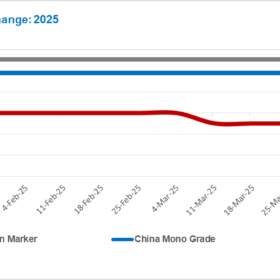
Polysilicon prices decline amid growing short-term market pessimism
In a new weekly update for pv magazine, OPIS, a Dow Jones company, reports that prevailing pessimism in the global polysilicon market continues to intensify, with current conditions still favoring buyers to a certain extent, allowing them to retain a degree of leverage in negotiations.

Chinese PV Industry Brief: Polysilicon output rises, stirring oversupply fears
China’s polysilicon and solar module prices held steady this week amid low trading volumes, but softening producer quotes and rising output across the supply chain signaled mounting oversupply risks.
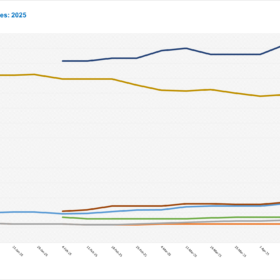
FOB China module prices rise amid growing market expectations of sharp correction by end-Q2
In a new weekly update for pv magazine, OPIS, a Dow Jones company, FOB China TOPCon below 450 W modules for spot loading were stable at $0.093/W, with price indications between $0.087-0.100/W. Furthermore, it reveals that current price increases are not being uniformly adopted across all Chinese manufacturers, with significant price differences—often several euro cents— being observed between the Top 5 and Top 10 manufacturers.
International PV module pricing may rise to $0.11/W by year end
International PV module prices, driven by Chinese averages, will likely rise from $0.08/W to $0.10/W today to $0.11/W by the end of 2025 and potentially $0.13/W by 2027, says Clean Energy Associates (CEA), noting that heterojunction and back-contact technologies now make up 12% of global module capacity.
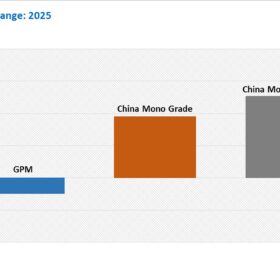
Polysilicon market steady amid challenging short-term outlook
In a new weekly update for pv magazine, OPIS, a Dow Jones company, provides a quick look at the main price trends in the global PV industry.

Chinese PV Industry Brief: Tongwei secures $1.38 billion for polysilicon business
Tongwei says it will bring in strategic investors for its polysilicon subsidiary, Sichuan Yongxiang Co., raising CNY 10 billion ($1.38 billion) at a CNY 27 billion valuation, with investors acquiring a stake up to 27.03%.
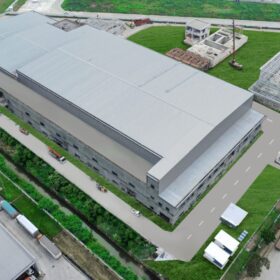
Gstar’s wafer factory in Indonesia gets monocrystalline growth furnaces
Singapore-based solar manufacturer Gstar Solar has received the first of 120 monocrystalline growth furnaces to be delivered to its new 3 GW wafer manufacturing facility in Indonesia.
