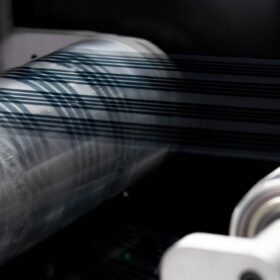
Swedish organic PV manufacturer secures financial boost
Indoor PV specialist Epishine has received direct funding of SEK 33.7 million ($3.46 million) from the Swedish Energy Agency towards expansion of its roll-to-roll production line.

PV-powered thermal distillation device with self-cleaning, cooling
Scientists in Hungary have built a prototype of a thermal distillation device, supported by PV power. The PV panels use an IoT component that self-cleans when dust is detected and cools itself when the temperatures are too high. The system achieved a daily freshwater yield of 6.1 L/m2⋅day.
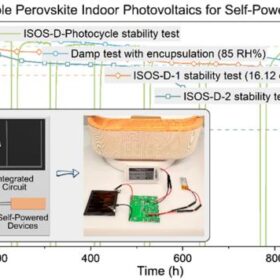
Scientists build 42.01%-efficient indoor PV cell for self-powered devices
An international researc team has included an interlocked self-assembled monolayer in perovskite indoor PV to enhance its stability and durability. Fabricating cells, mini modules, and a prototype device of an electronic price tag, the novel structure was tested. It was found to exhibit a lifetime approaching 6,000 hours.
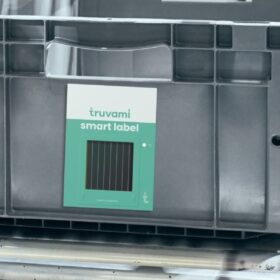
Swiss startup offers organic PV-powered asset tracker
Truvami has launched an organic PV-powered asset tracker equipped with localization and sensor technology for battery-free use indoors and outdoors, targeting logistics and manufacturing applications.

ABB delivers automation solutions for 10 GW of renewables in India
ABB’s programmable logic controller-based automation solutions are now catering to more than 10 GW of renewable energy plants in India, including solar, wind and battery energy storage systems.

Indoor PV powered wireless touch-switch to control home, office equipment
U.K.-based indoor PV specialist Lightricity and Japanese capacitator manufacturer Nichicon have developed a PV-powered Bluetooth switch to remotely control home or office equipment, such as lighting, sliding doors, or appliances.
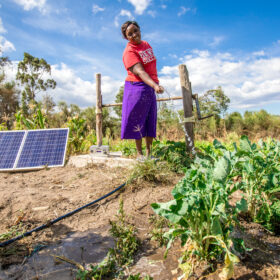
Payment plans key for solar water pumping in Sub-Saharan Africa
If solar-powered irrigation pumps can be rolled out in a responsible manner at scale, the impact on agriculture in sub-Saharan Africa could be transformational.
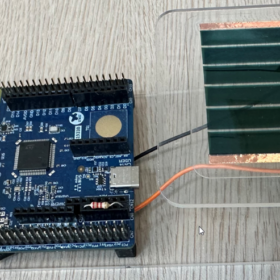
Dracula Technologies, STMicroelectronics unveil photovoltaic illuminometer
France’s indoor organic PV specialist Dracula Technologies and Swiss-headquartered semiconductor manufacturer STMicroelectronics demonstrated a battery-free illuminometer at the Embedded World trade fair in Germany last week.
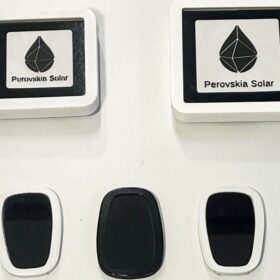
Swiss perovskite startup sets up indoor solar cell manufacturing
Indoor solar cell developer, Perovskia Solar, is setting up a factory in Switzerland that may reportedly print 1 million of its custom-designed perovskite devices annually. It targets the market for self-powering consumer electronics and internet-of-things devices, such as fire-alarms, fitness trackers, and sensors.
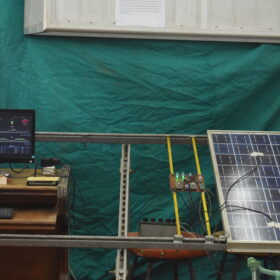
Scientists unveil low-cost, wireless monitoring system for PV systems
Researchers from Egypt have utilized NodeMCU WiFi modules and a single-board Raspberry Pi to monitor and control PV modules. Their tests showed a “good degree of agreement” between the system and multimeter readings.
