
India to raise customs duty on solar inverters
Imported inverters and solar lanterns may become costlier from April, as the new budget raised the charges levied on them from 5%, for each category, to 20% and 15%, respectively.
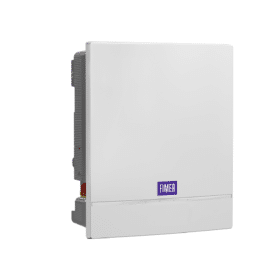
Fimer unveils two new three-phase string inverters
The Italian inverter maker said the two devices were designed to deal with increasing PV module currents. The inverters have a power output ranging from 10 to 33 kW and are claimed to reach an input voltage of 1100 V (DC).
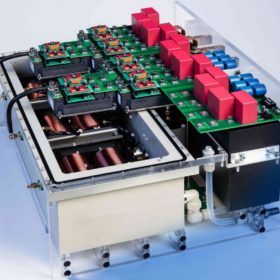
Silicon-carbide inverter for medium-voltage grids
Developed by scientists from German research institute Fraunhofer ISE, the silicon-carbide device claims 98.4% efficiency and could be used in utility-scale photovoltaic projects.

Tidal flats in eastern China to host 300 MW of solar
Developers have already connected 3 MW of capacity in what is purportedly destined to be the world’s largest PV array on a coastal tidal flat. The project, which is particularly challenging due to tidal fluctuations, will feature PV components designed to cope with salt and water damage.

Smart meters disrupt residential PV segment in Belgium’s Flanders region
A recent ruling of the Belgian constitutional court has canceled the 15-year grace period granted to residential PV system owners to keep operating under net metering despite the arrival of smart meters. The Flemish government said it will provide some compensation for the financial losses that this decision will cause.
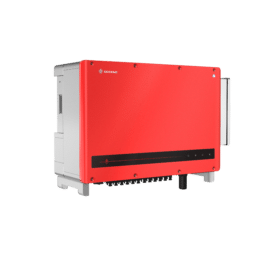
GoodWe launches 1500 V string inverter series
The two devices of the series have, both, an efficiency of 99%. With this new inverter series, GoodWe has made its first step into the large scale PV business.
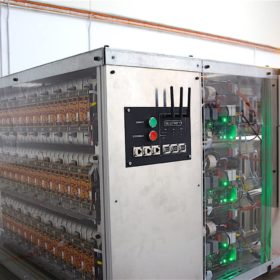
Relectrify posts results from second-life battery systems
After more than a year of testing, Relectrify has released the interim results of a pilot that combines repurposed batteries from Nissan Leaf vehicles with proprietary inverter technology.
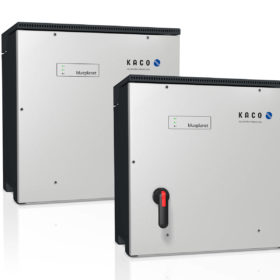
Kaco unveils string inverters with silicon carbide transistors
The blueplanet 155 TL3 and 165 TL3 inverters, designed for the large-scale segment, are claimed to offer 15% more power than their predecessor models without silicon carbide transistors.
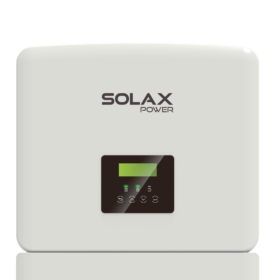
All-in-one residential battery inverter solution from Solax
The new solution integrates the inverters of Solax’s X-1 Hybrid G4 series and its Triple Power 3.0 Battery systems. According to the manufacturer, the hybrid battery inverter can be deployed in only 30 minutes and by a single person.

Iberdrola and Ingeteam set up JV to produce electrolyzers in Spain
Iberlyzer will begin operations next year and will produce more than 200 MW of electrolyzers in 2023, with an initial investment of close to €100 million. In addition, the Spanish energy giant has signed an agreement with Norwegian company Nel to build and develop large electrolyzers in Spain.
