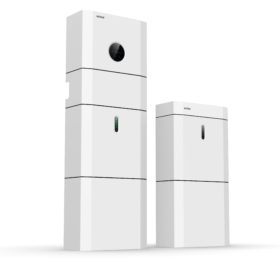
Kstar launches all-in-one residential battery inverter solution
Its new line of residential hybrid storage systems integrates Kstar inverter technology with the lithium-ion storage technology of Chinese battery specialist CATL.
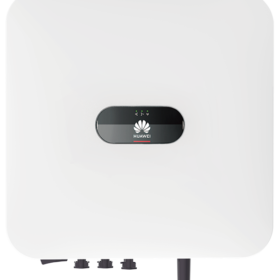
New residential inverter from Huawei
With power ranging from 2-6 kW in the seven-device series, the Sun2000-2-6KTL-L1 string inverters offer efficiencies of 98.2-98.4%. The 12kg products measure 365x365x156mm and feature two maximum power point tracking channels.
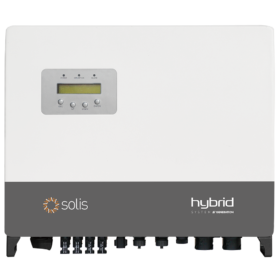
New residential battery inverter from Ginlong
The Chinese manufacturer has unveiled a hybrid product with a power range of 6.5-13 kW. The device has a maximum efficiency of 98.4%, according to Ginlong, and battery charging/discharging efficiency of 97.5%.
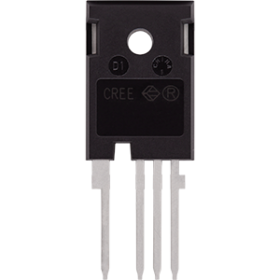
New 650 V MOSFET for silicon carbide inverters
CREE has developed a new MOSFET that could be suitable for silicon-carbide-based string inverters above 10 kW in size. The U.S. manufacturer says switching losses are 20% lower with the new transistor than with common silicon carbide MOSFETs, and claims that the product reduces conduction losses by 50%, to offer potential power-density growth of 300%.
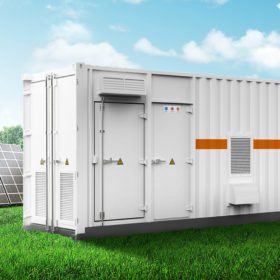
Chinese 202 MW/MWh solar-plus-storage project
Inverter maker Sungrow is supplying the inverters and storage system for China’s largest, 202.8 MW/MWh solar-plus-storage facility. The plant will be connected to a new, 800 kV ultra-high voltage power line.
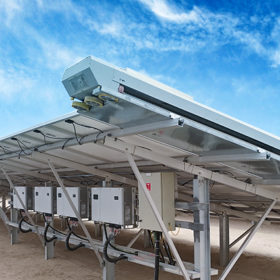
Huawei to ramp up artificial intelligence to improve solar inverters
The Chinese conglomerate has revealed how it will further integrate artificial intelligence (AI) in its string devices this year. The approach includes the transformation of inverters into smart PV controllers, the development of AI inference modules and the creation of an AI training and inference platform. Machine learning will also be incorporated into operations and maintenance, grid management and PV plant design.
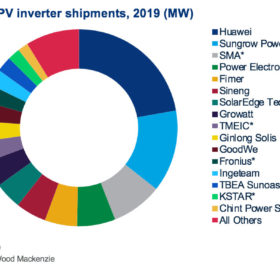
Huawei, Sungrow and SMA dominate global inverter market
Analysis from Wood Mackenzie shows global inverter demand grew 18% last year. The ten largest inverter suppliers accounted for 76% of the global trade.
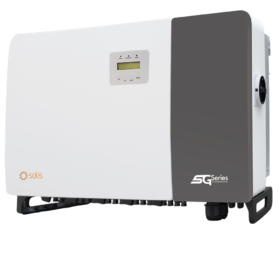
New 5G string-inverter for commercial applications from Ginlong
The Chinese manufacturer has integrated the Solis 110 kW string inverter into its 5G tech platform. The company claims the upgraded device can offer stronger system returns and a lower levelized cost of energy. The price of the Solis-110K-5G inverter is €0.035/W.
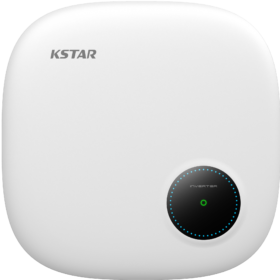
Kstar launches new inverter series for rooftop arrays
The transformer-free products have a power range of 3-6 kW and efficiency of 97.8%. The Chinese manufacturer says the devices are designed to accurately match the voltage and phase of the grid sine wave AC waveform.

General Electric works on grid-forming inverter controls
The U.S. conglomerate plans to deploy and test new controls with its commercial PV LV5 inverter platform. It aims to develop “grid-forming” controls to allow wind and solar inverters to form voltage and frequency levels like traditional generators. The company wants to improve coordination and synchronization among multiple grid-forming resources, and is working on smart PV reserve controls to improve the transient stability of systems with high renewables penetration.
