
Generac launches microinverter with ‘unlimited backup’ package
The US-based generator company has released its PWRmicro microinverter, which integrates with the company’s energy storage, generator, and energy management system to offer a ‘parallel backup’ solution.
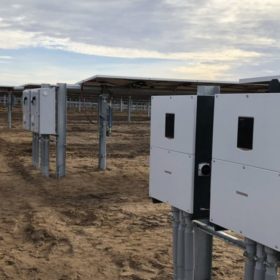
Sungrow initiates Hong Kong listing, targets $126.7 million raise
As part of a dual-listing strategy, the Chinese manufacturer has officially filed its application for an initial public offering on the main board of the Hong Kong Stock Exchange, aiming to fuel its global expansion.

SMA to cut 350 jobs by 2026 amid weak solar inverter market
SMA Solar Technology will reduce 350 positions worldwide as part of an expanded restructuring program to cut costs and regain competitiveness.
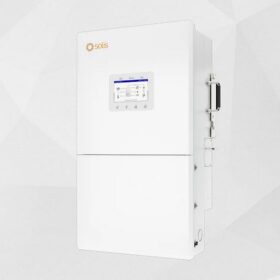
Solis launches 16 kW residential and 60 kW commercial hybrid inverters
The Chinese manufacturer released two new hybrid string inverters that range from 9.6 kW to 16 kW for the residential market, and from 30 kW to 60 kW for the commercial market.

New control strategy for grid-forming inverters
Researchers in the United States have created a droop control strategy for grid-forming inverters that purportedly improves power system frequency stability. By using an exponential active power–frequency relationship, the novel technique optimizes the use of available headroom, reduces frequency deviations, and enhances overall grid resilience.

Chinese PV Industry Brief: New PV additions for August total only 7.3 GW
China installed 7.36 GW of new solar in August, bringing year-to-date capacity additions to 230.61 GW and total power generation capacity to 3.69 TW.

Cypriot startup unveils new device to reduce solar curtailment
Cyprus-based Enerthon has developed a smart zero-export control device that prevents PV export losses from curtailment by directing generation to self-consumption. Certification is expected soon.

Chinese PV Industry Brief: Inverter manufacturers report solid H1 results
Sungrow, Ginlong Solis, GoodWe and Deye all posted higher first-half revenue in 2025, with Sungrow leading on storage growth and Deye delivering the strongest margins.
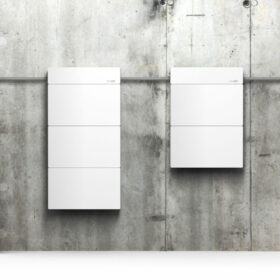
SolarEdge unveils all-in-one residential inverter and clickable modular battery system
The stackable battery ranges 4.9 kWh to 19.6 kWh per unit while the inverter is available in ranges from 3.8 kW to 13 kW. The company also introduced a meter socket adapter to avoid triggering costly main panel upgrades.
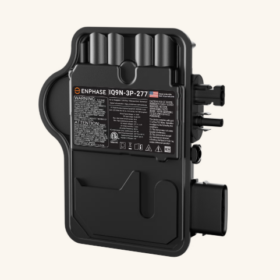
Enphase introduces 97.5%-efficient microinverter based on gallium nitride tech
The inverter is designed for three-phase grid configurations without using external transformers. It contains gallium nitride technology, a first for Enphase’s microinverters.
