
Japan to launch platform linking aggregators with FIP operators
Japan plans to launch an online platform by September 2025 linking aggregators with feed-in premium (FIP) operators to support grid integration, streamline solar battery installations, and improve planning and forecasting for renewable projects.

Canadian Solar fund reports April shortfall amid Japan curtailments
Canadian Solar Infrastructure Fund says April output fell 10.2% below forecast across its Japan portfolio due to increased grid curtailments, especially on the island of Kyushu.
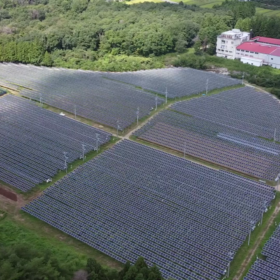
Japan’s energy R&D agency unveils solar strategy
Japan’s New Energy and Industrial Technology Development Organization (NEDO) has published a solar strategy to scale up deployment and drive next-generation technology, aiming for carbon neutrality by 2050.
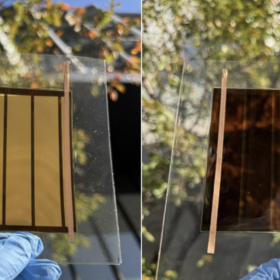
Scientists unveil durable perovskite PV modules with carbon nanotube electrode
Japanese researchers have engineered a 100 cm² perovskite solar cell module featuring a robust single-walled carbon nanotube (CNT) electrode to improve durability and enable dual-sided light absorption.
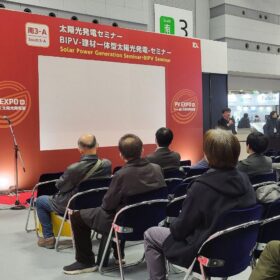
Key takeaways from Smart Energy Week 2025 in Tokyo
Smart Energy Week 2025 in Tokyo highlighted Japan’s shifting energy priorities, with officials promoting perovskite solar at PV Expo and companies showcasing solid-state battery tech at Battery Japan.

Japan keeps lead in solid-state battery development
While China, South Korea, Europe, and the United States are also engaged in active development of all solid-state batteries, Japan is leading the charge, offering generous subsidies to technology proponents.

Weekend Read: Japan turns to the rooftop
Japanese policymakers are now looking at rooftop solar panels as land is scarce in the country and agrivoltaics, building-integrated PV (BIPV), and floating solar are still in their infancy, reports Mark Hutchins.
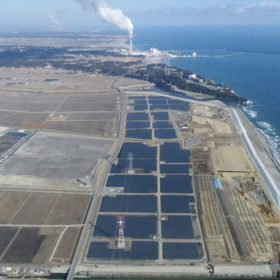
Still big in Japan?
A flat year for solar installation numbers in Japan could be seen as positive in a nation switching to new PV business models, writes Izumi Kaizuka, director of research for Japanese solar consultancy RTS Corp.
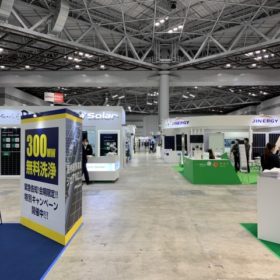
Coronavirus concerns overshadow PV Expo in Tokyo
The annual trade show was not particularly well-attended this year, but market sentiment is still positive in Japan – nobody believes that installations will drop due to the coronavirus outbreak. And the country’s upstream industry – modules, batteries, and hydrogen tech – clearly remains compelling, given the number of brave souls who actually did make the trip out to Tokyo Big Sight this year.
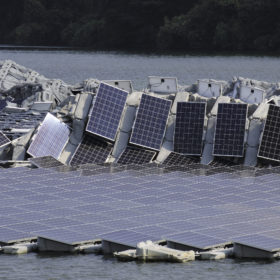
The weekend read: Don’t throw caution to the wind
Japan’s Ministry of Economy, Trade and Industry (METI) has opened a formal investigation into the exact failure mode behind the destruction at the Yamakura Dam floating PV installation. In the end, the ministry seeks to draw up a plan to revamp not just the dam, but also the arrays that are still intact. This is a learning exercise that should be closely followed, as floating PV is enjoying growing popularity.
