Australian researchers question lack of solar microgrids in remote areas
Researchers from four Australian universities have released a new paper questioning why solar microgrids are not the norm in remote central Australia.
Solar canopies as a central pillar of IRA-driven energy transition
With so much of the space in United States cities allocated for parking, the dual pronged approach of the Inflation Reduction Act (IRA) – production tax credits to drive investment in domestic manufacturing and investment tax credits to attract consumer-side investment – means solar canopies can make a huge contribution to the net zero drive.
New control technique for microgrid-connected PV systems
An international research group has applied for the first time integral backstepping control (IBC) as a control strategy for PV systems connected to microgrids. Through a series of simulations, the scientists found the new approach can provide better results than classic backstepping control (BC) and other techniques.
Growing US microgrid market hits 10 GW in 2022
Wood Mackenzie estimates that the US microgrid market has seen a 47% increase in solar and storage capacity in 2022 compared to 2017 levels, driven by rising demand for uninterrupted services, military resilience plans, and corporate environmental, social, and corporate governance (ESG) goals.
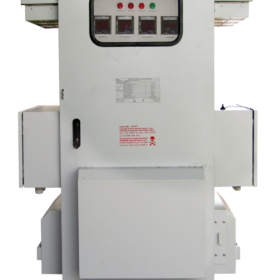
Statcon Energiaa launches plug-and-play microgrid inverter solution
India’s Statcon Energiaa has developed an outdoor inverter solution for microgrids that can integrate multiple energy sources, including renewables (biomass, wind, hydro and solar), battery storage, and diesel generators. It can deliver continuous, voltage-stabilized power to the loads and supports AC and DC coupling.
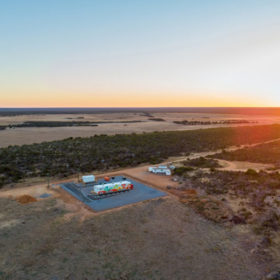
Australian town to be powered by pumped-hydro microgrid
The town of Walpole on Western Australia’s southernmost tip will soon be powered by a pumped-hydro microgrid, a first for the state which is already renowned for its rollout of microgrids and distributed renewable solutions.

Rwanda seeks consultants to support development of mini-grids
The Development Bank of Rwanda wants to finance developers to build photovoltaic and mini-grids ranging in size from 10 kW to 1 MW.

Transforming lives with solar mini-grids
Smart Power India, a unit of the Rockefeller Foundation, has supported the installation of 9.2 MW of renewables-based minigrids at more than 300 sites across India. Jaideep Mukherjee, CEO of SPI, recently spoke to pv magazine about the importance of minigrids and barriers to deployment.

Indian utility seeks electrolyzer pilot projects
State-run power company NTPC wants to explore the feasibility of using hydrogen instead of diesel for back-up power and micro-grid application.

What will African nations require to produce competitive green hydrogen exports?
A robust national strategy, a portfolio of renewable energy assets, public subsidies and, ideally, existing gas pipelines will all favor African nations aiming to become exporters in the energy storage medium, participants heard at a recent two-day green hydrogen conference.
