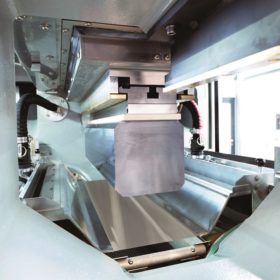
MIT researchers put slimmer silicon back on the table
With solar grade polysilicon prices having plummeted in recent years, cutting down on consumption of the material has not been a priority. But strategies exist and significant savings can be made through deploying thinner wafers that use less silicon, insists a new paper published by MIT and NREL. And as manufacturers are increasingly hitting dead ends on other routes to cost reduction, this option could be back on the table for many.
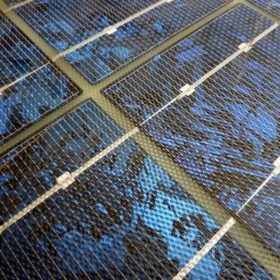
US scientists claim clear-sky irradiance model provides better results for module testing
Researchers at the American Institute of Physics have used the clear-sky irradiance model developed by the National Renewable Energy Laboratory to measure the degradation rates of solar panels at a testing field in Germany over five years. The scientists say the model, when combined with real-world data, offers an efficient tool to evaluate the aging of PV technology.
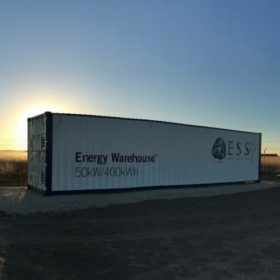
U.S. research teams aim for long-duration storage at $0.05/kWh
To get long-duration storage costs down to $0.05/kWh, research teams funded by ARPA-E are pursuing breakthroughs in flow batteries, hydrogen storage and other technologies – even thermovoltaics.

Aquavoltaic potential in Taiwan
Scientists have developed a new mathematical model which indicates floating solar on fish farms could be a lucrative option in land-scarce Taiwan. Although floating arrays could hinder fish production, the losses would be largely compensated by electricity-related income.
Peering into a 55% solar future for the US
National Renewable Energy Lab researchers conducted hourly modelling based on a future energy mix containing 55% solar power and found spring days of free electricity among the results, emphasizing the critical role energy storage will play.
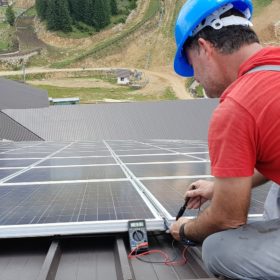
Live fast, die young: MIT study proposes use of 10-year panels
Research has found even short-lived, 10 to 15-year solar panels could provide enough return for bankable projects. The researchers believe panel costs, coupled with an industry mindset now fixed on the final solar energy price rather than costs per kilowatt installed, may open opportunities for PV products currently snubbed because of a short lifecycle.

A common language for bifacial PV
This week pv magazine was in Amsterdam for the sixth edition of the BifiPV workshop, where the discussion focused on the impressive achievements made by bifacial solar modules and the challenges the technology faces as it moves toward mainstream adoption.
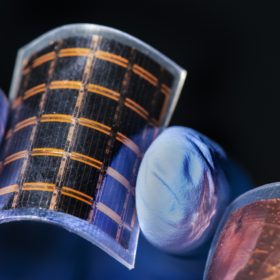
Another step toward affordable III-V solar cells
The U.S. National Renewable Energy Laboratory reports further progress in bringing down the cost of III-V solar cells. Scientists have refined their ‘brand new, 50-year-old’ D-HVPE technology to speed up the production rate for gallium arsenide solar cells by a factor of more than 20. The development is a potential step toward making incredibly efficient solar cells cost effective for everyday purposes.
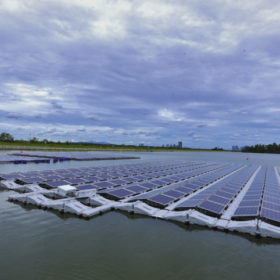
Solar’s 20 most overlooked benefits for global sustainability
As renewable energy development is ramped up to address the climate crisis, negative side-effects should be avoided, especially when technology and resources could maximize the benefits. ‘Techno-ecological’ crossovers could ensure win-win outcomes for solar development and ecosystem and biodiversity conservation.
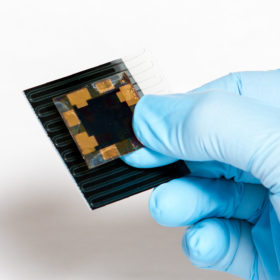
Miasolé hits 20.56% efficiency with flexible CIGS technology
California based Hanergy subsidiary Miasolé has broken its own internal record for thin film cell efficiency, surpassing the 20% mark. The efficiency of 20.56% on a flexible substrate has been confirmed by U.S. National Renewable Energy Laboratory.
