The implications of a messy Meyer Burger-Oxford PV divorce for European perovskites
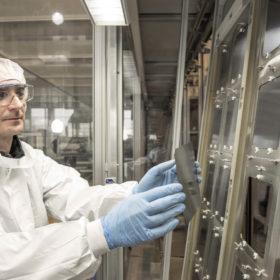
Last week’s announcement Oxford PV wants to wind up its “exclusive cooperation” with Meyer Burger after the fit out of its 100 MW German factory points to a potential divergence in strategies. And with Meyer Burger considering legal action in response, it could result in a messy, disruptive separation.

Meyer Burger considers legal action as Oxford PV unilaterally terminates exclusive cooperation
Meyer Burger claims machines to produce perovskite tandem solar cells are still missing at Oxford PV’s manufacturing plant in Germany’s Brandenburg an der Havel. Despite this, Oxford PV terminated the cooperation with the turnkey machine supplier in a surprise move last week. The Swiss technology group, which now produces its own heterojunction solar cells and modules in Germany, is now considering legal action.

An environmental failsafe for lead-based perovskites
Scientists in Switzerland discovered that certain types of phosphate salt react with lead only in the presence of moisture, to form non-water-soluble phosphates. Incorporating these salts into the architecture of a lead-based perovskite solar cell could greatly reduce the risk of lead seeping into the environment should the cells be damaged, without incurring significant costs or negatively affecting the cell’s performance.
Inverted perovskite solar cell with 22.1% efficiency via star-shaped polymer
The solar cell was fabricated with a special polymer that is able to passivate defects at the grain boundaries and interfacial surfaces, inhibit nonradiative recombination and charge-transport loss, and improve stabilities under moisture. The device exhibited a remarkable fill factor, of 0.862.
Proper recycling could help perovskite modules to outcompete rivals
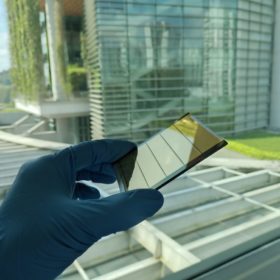
Proper recycling strategies for perovskite modules could ensure sustainability and improve energy payback times, according to US researchers. They claim that the best recycled perovskite cell architecture could produce an energy payback time of about one month, versus 1.3 to 2.4 years for crystalline silicon modules.
1366 Technologies merges with Hunt Perovskite Technologies
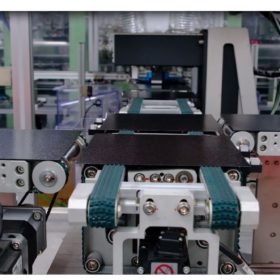
U.S. thin-film manufacturer First Solar and Bill Gates-owned Breakthrough Energy Ventures (BEV) are among the investors in the new company, which is called CubicPV and is expected to develop multi-junction perovskite solar cells with efficiencies of around 30%.
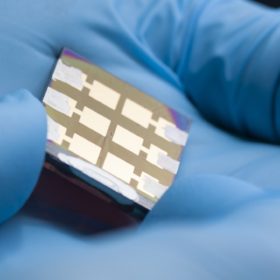
Lead halide perovskite cell based on benzodithiophene cation achieves 14.7% efficiency
Swiss researchers sought for the first time to replace phenylethylammonium (PEA) with benzodithiophene (BDT) in cations for perovskite cells. The latter showed improved stability and ensured a power conversion efficiency that was 1% higher than that of its counterpart.
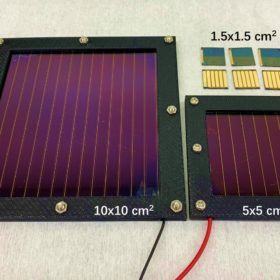
New perovskite material for 23.5%-efficient solar cell
Researchers in Japan have found a new way to fabricate one of the most promising perovskite materials for PV application — the α-formamidinium lead iodide known as α-FAPbI3. With a pre-synthesized version of this material, they were able to produce a cell with a power conversion efficiency of 23.5% and a lifespan of more than 2,000 hours.
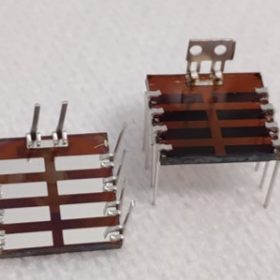
Black perovskite solar cell with 15% efficiency via thermal evaporation
The cell exhibited an open-circuit voltage of 1.1 V and was able to retain around 90% of its initial performance after 215 days of exposure to dim light at room temperature. According to its creators, this performance and the notable stability were ensured by the thermal evaporation technique used for depositing the perovskite layers onto the cell.

Flexible perovskite solar module with 10.5% efficiency
The methylammonium-free inverted solar module was built on a flexible substrate made of polyethylene terephthalate (PET). A hole transporting material made of poly(triarylamine) (PTAA) and a double-cation cesium formamidinium (CsFA) perovskite layer were deposited through blade-coating and nitrogen-assisted blade-coating.
