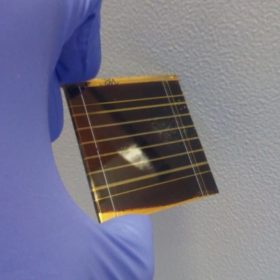
Perovskite solar panel with 16.1% efficiency via ambient air blade-coating
The panel, fabricated by scientists in Italy, is composed of five series-connected cells, each with an area of 2.01 cm² and has an aperture area of 11 cm². It showed a power conversion efficiency of 16.1%, an open-circuit voltage of 5.59 V, a short-circuit current of 37 mA, and a fill factor of 72.5%.
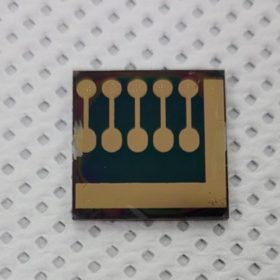
Perovskite solar cell with 19.1% efficiency via CO2 doping
Thanks to a carbon dioxide doping technique, the solar cell interlayers exhibited conductivity around five times higher than that of a perovskite cell based on interlayers doped with oxygen. The device also showed an open-circuit voltage of 1.14 V, a short-circuit current density of 21.2 mA cm2 and a fill factor of 0.79.

Huawei and Yingli announce smart collaboration
The two brands announced a strategic project at the SNEC solar conference and trade show which will see the establishment of trading and big data centers to help roll-out PV in China.
Swedish perovskite startup picks up new investment
Norway based renewables investor Magnora has increased its stake in startup equipment supplier Evolar, which is aiming to bring a production line for perovskite solar cells to market. Magnora will now hold a 40.7% stake in the company as part of a long-term deal between the two, with options to further increase the stake available down the line.
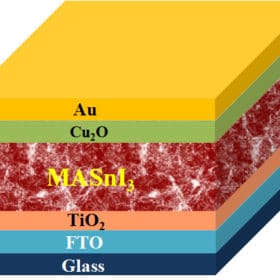
Lead-free perovskite solar cell with potential efficiency of 27.4%
Scientists in India have simulated a perovskite cell based on methylammonium tin iodide which they claim may achieve a short circuit current density of 25.97 mA per square centimeter, an open-circuit voltage of 1.203 V, and a fill factor of 87.79%. The cell is composed of a fluorine-doped tin oxide (FTO) substrate, a titanium oxide layer, a methylammonium tin iodide perovskite film, a copper oxide hole transport layer (HTL), and a layer made of gold (Au).

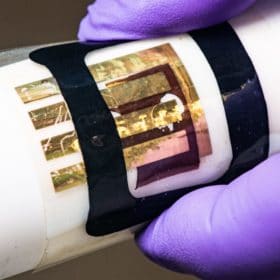
CEA-Ines achieves 19.2% efficiency for flexible perovskite solar cell
The cell was fabricated with a flexible substrate made of indium tin oxide (ITO) and polyethylene terephthalate (PET). The device was tested through a damp heat test and showed it can retain around 90% of its initial efficiency after 800 hours.
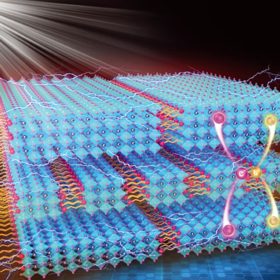
Sandwich structure of quasi-2D perovskite film nourishes next-gen solar development
Even as solar researchers strive to squeeze every drop of efficiency from the industry-ruling silicon solar-cell technology, scientists are constantly questing for the next, cheaper, more efficient way of harvesting the sun’s energy to power human endeavours. The appetite for accelerating 2D perovskite solar cell development has just been piqued!
US scientists gain an atom-level view into perovskite cell efficiency
Using Department of Energy laboratories, scientists learned at the atomic level that a liquid-like motion in perovskites may explain how they efficiently produce electric currents.
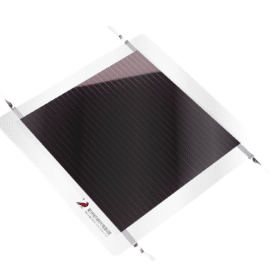
Microquanta claims 20.2% efficiency on small perovskite module
The result, confirmed and certified by the China Institute of Metrology, amounts to the sixth conversion efficiency landmark achieved by the six-year-old, Hangzhou-based manufacturer.
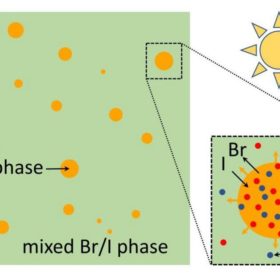
Thermodynamic model to build more-stable perovskite solar cells
Dutch scientists claim to have developed a theory that explains the mechanisms behind halide segregation, which is the main factor affecting thermal stability in perovskite solar cells. They affirmed that the theory may provide technical solutions to build more stable perovskite PV devices.
