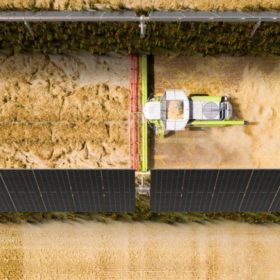
BayWa, Velux sign Europe’s first agrivoltaics-linked PPA
Germany’s BayWa r.e. and Denmark’s Velux have announced the first agrivoltaic corporate power purchase agreement (PPA) in Europe. BayWa will build two solar parks in Spain to power Velux’s operations, with capacities of 60 MWp and 56 MWp. One of them will partly be an agricultural PV project.
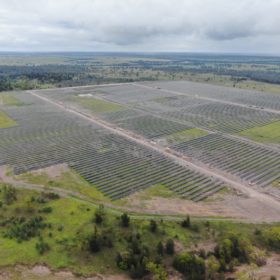
X-Elio flicks switch on 200 MW solar project in Australia
The 200 MW Blue Grass Solar Farm has been officially launched in the Australian state of Queensland, with Spanish developer X-Elio saying that the AUD 215 million ($145.3 million) project has achieved full commercial operations.

US battery maker unveils solid-state storage systems for residential applications
Amptricity has emerged from stealth mode with plans to manufacture solid-state batteries for residential and commercial installations.
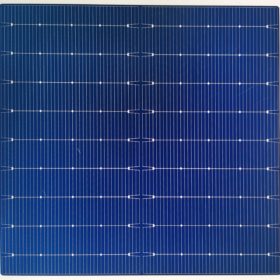
Chinese PV Industry Brief: Golden Solar, Boamax announce new module factories
Golden Solar has unveiled a plan to set up a new 1.5 GW production line for heterojunction products in the Zhangjiakou Renewable Energy Demonstration Zone. Boamax, meanwhile, said it wants to set up an 18 GW panel factory in Inner Mongolia.
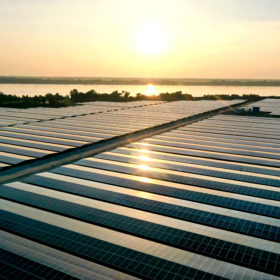
Ernst & Young ranks India, China, US as world’s most attractive solar markets
India is the top market for solar investment, according to the latest edition of Ernst & Young’s renewables attractiveness index. Spain, Germany and the United States are the top three markets for corporate power purchase agreements (PPAs).
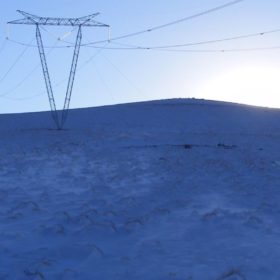
Strategically timed, transnational exchange of solar energy
Argentina and Chile are reactivating the Andes Interconnection Line to facilitate the bidirectional exchange of energy. During the day, Argentina will receive 80 MW of solar from Chile, but it will export back 200 MW of natural gas at night.

Italy’s Key Energy positions agrivoltaics, utility storage as new market drivers
The latest edition of Key Energy, Italy’s top solar event, shows that the nation is once again poised for growth. It also shows that incentive schemes can turn agrivoltaics and large-scale storage into market drivers like rooftop and ground-mounted PV.

Photovoltaic signboard with 18.5% efficiency
Dansk Solenergi, a Danish building-integrated PV specialist, has launched a round, 95 W solar module that works as a PV signboard. Its 35 solar cells, which remain hidden behind an image of Earth, have an efficiency of 18.5%.
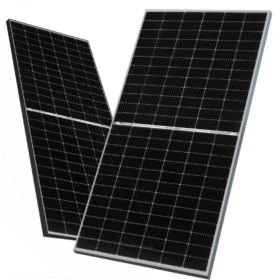
JinkoSolar claims 23.86% efficiency for n-type, TOPCon monocrystalline panel
JinkoSolar’s newest PV module has an efficiency rating of 23.86%. It is based on its TOPCon mono cell tech, which achieved a record efficiency of 26.1% in October, as confirmed by TÜV Rheinland.
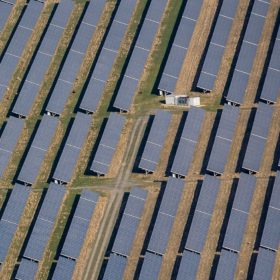
Roadmap to increase solar acceptance
The PV sector has significant implications for the economy, society and the environment. Positive impacts show that PV is a key contributor on the path to sustainability, and that highlighting these benefits could raise social and political acceptance in the transition to sustainable energy.
