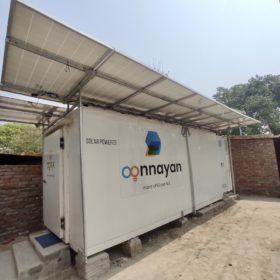
Solar-powered cold storage service
Small farmers in the Indian state of Bihar are making productive use of solar energy to reduce their losses and increase their income, thanks to an innovative pay-per-use cooling service for perishable produce.
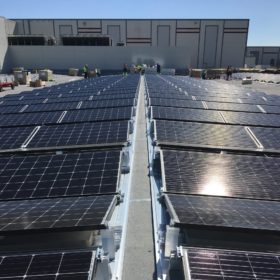
PV modules degrade less in Nordic climates
Norwegian researchers have used a year-on-year approach, considering the combined effect of temperature, humidity, and ultraviolet irradiation, to assess the degradation rate of polycrystalline modules with a temperature coefficient of -0.43%, mounted with an approximately 10-degree tilt, and located in eastern Norway. They found that these modules degrade in the range in the range of 0.1-0.19% per year, which is 0.4% less than panels operating in other climates.
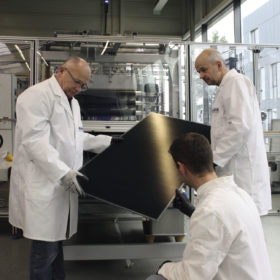
Chinese court upholds laminator patent
German manufacturer Robert Bürkle GmbH has obtained a first instance judgement preventing a rival company from producing equipment that infringes on its patents. The decision of the Intermediate Peoples Court in China is not yet final, and the rival company has already filed a complaint against the ruling.
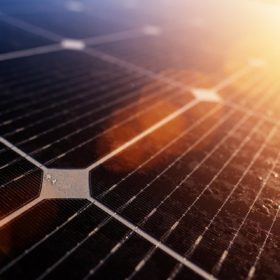
Indian manufacturer orders 1.2 GW solar production line
Gujarat-based solar panel maker Solex Energy will buy the production equipment from China’s Jinchen Machinery. The company also has plans for a cell line.
A repair tape for cracked backsheets
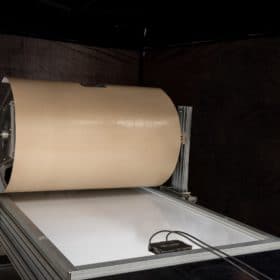
Backsheet failures have plagued the industry, causing hefty financial burdens to many asset owners. DuPont has launched a product it says allows for easy repair of modules.

Cadmium-free kesterite solar cell with 9.82% efficiency
Researchers in South Korea have fabricated a cadmium-free heterojunction kesterite solar cell based on a zinc sulfide oxide Zn(O,S) buffer layer. They used a one-minute ammonium sulfide (NH4)2S treatment process for surface cleaning and passivation of the cell’s CZTSSe absorber.

Nepal wants to support renewables up to 1 MW through viability gap funding
Nepal’s Alternative Energy Promotion Centre (AEPC) is seeking proposals for renewable energy projects not exceeding 1 MW in size.

Italy installed 152 MW of PV in Q1 2021
The country installed 35 MW more solar in the first three months of the year than it did in the same period a year earlier. Its cumulative capacity surpassed 22.1 GW by the end of March.

Cheaper renewables could leave new Indian coal assets stranded
A newly published Institute for Energy Economics and Financial Analysis report looks at the viability of under-construction coal-fired power plants and evaluates the risk of building additional coal-fired capacity in India’s electricity system.

Australian research prompts rethink on silicon heterojunction cell production
Defect engineering for silicon heterojunction solar cells has come a long way. But Matthew Wright, a solar researcher at the University of New South Wales, asks whether these proven efficiency gains could be applied more effectively.
