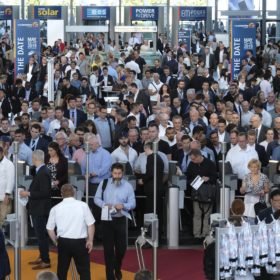
The Smarter E Europe postponed to July
The organizers of Intersolar and Ees Europe, in Munich, the largest photovoltaic and storage trade fairs in Europe, have decided to postpone the two events by six weeks. They hope that in the second half of the year there will be fewer restrictions and that the summer will have a dampening effect on the coronavirus pandemic.

Germany installed 4.88 GW of solar in 2020
The country saw around 525 MW of new PV capacity come online in December alone. The feed-in tariffs for PV systems not exceeding 750 kW in size were reduced by 1.4%.
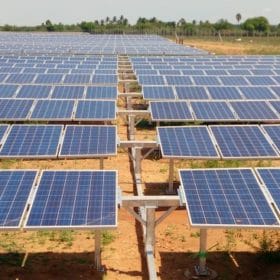
India’s state power companies invited to develop 5 GW of solar
The PV projects – tendered under the Central Public Sector Undertaking scheme – will be entitled to government support through ‘viability gap funding’, with the level awarded determined by reverse-bidding auctions for the project capacity.

Turkey sets fixed tariff for licensed PV projects
Large scale PV projects selected in public tenders held by the Turkish authorities will be awarded a 10-year tariff of TRL0.32/kWh ($0.044). The tariff will be indexed to inflation and dollar-euro exchange rate.
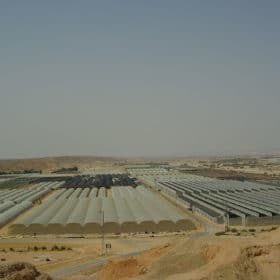
Israeli government wants to boost development of agrivoltaics
The Israel Ministry of Energy and the Ministry of Agriculture have decided to implement a pilot research program to assess the feasibility of agrivoltaic projects in the country. The possibility of combining PV and agriculture in a land with limited land availability and increasing energy demand is considered a win-win solution by the government.

Malaysia to allocate another 500 MW of rooftop PV under net metering
The NEM 3.0 program will run until the end of 2023 and will see the participation of residential, commercial and industrial prosumers as well as public entities and government ministries.

France publishes first-quarter FITs for PV systems up to 100 kW
The feed-in tariff granted reduces each quarter, in line with how much solar capacity was installed in the previous three-month period.

Dual passivation tech for 20.14%-efficient perovskite solar cell
Europium ions have been used by Chinese researchers to passivate both the perovskite and electron transport layer (ETL) films of a MAPbI3 perovskite solar cell. As a result, the device’s efficiency was raised by approximately 1.5%. The dual passivation approach also achieved an increase in the cell’s fill factor and open-circuit voltage.
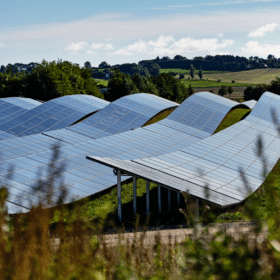
Seven-year PPA for 34 MW solar park in Denmark
Denmark’s Better Energy is building the PV facility in Denmark’s southernmost region. Danish pharmaceutical company Lundbeck has agreed to buy the power generated by the plant over a seven-year period.
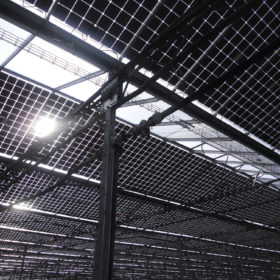
Boosting bifacial panel efficiency with albedo ground covers: Field test results
Tests by 7X Energy show that ground cover material showed promise, but projects will likely still need to prove the long-term durability, degradation rates, and validation of installation labor and O&M.
