Chinese PV Industry Brief: More ingot and module capacity, China’s largest rooftop project and a possible new listing
A new week has brought another slew of big production capacity announcements as online retailer JD.com prepares to install 200 MW of solar rooftop capacity and project developer SFSY reported on a promising new business stream.

Iberdrola sets up green hydrogen unit
The Spanish energy company, which has hydrogen projects under way in its homeland and the United Kingdom, says it will allocate new resources to position itself at the forefront of the supply of renewables-powered hydrogen.
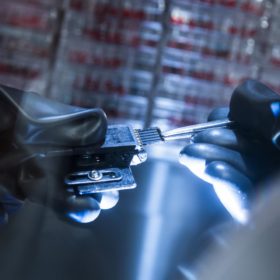
Perovskite solar cell based on metal-organic framework with 22.02% efficiency
Scientists in Hong Kong have developed a cell they say retains more than 90% of its initial efficiency under accelerated testing conditions. The device is based on two-dimensional metal-organic frameworks.
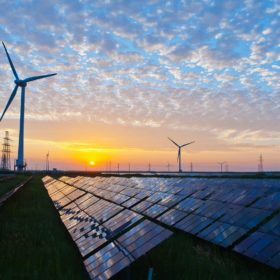
Choosing the right sites for Indian renewables
With biodiversity concerns and social impacts such as arguments over the loss of agricultural land delaying projects, non-profit The Nature Conservancy India has published a report to help developers choose their locations more carefully and get India’s energy transition back on track.
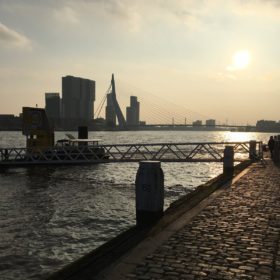
Netherlands allocates 3.44 GW of PV in spring round of 2020 SDE+ program
The Dutch government awarded 3.91 GW of renewable-energy capacity in the program’s latest round. It set aside €4 billion for the exercise, but only used €3.3 billion, including €2.1 billion for PV.
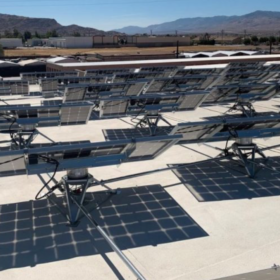
US solar racking industry now innovating, consolidating
With installers and developers trying to squeeze every kilowatt-hour out of every rooftop and every array, racking and trackers are the unsung heroes that secure and tilt panels, while maximizing output and protecting wiring and other gear.
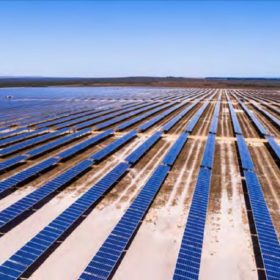
Western Australia seeks proposals for 1.5 GW of green hydrogen
The Western Australian government is talking to developers around the world about building a 1.5 GW wind and solar hydrogen hub at the Okajee Strategic Industrial Area. The state’s Mid West region has some of the world’s best solar and wind resources and they could drive the development of a local green hydrogen economy.
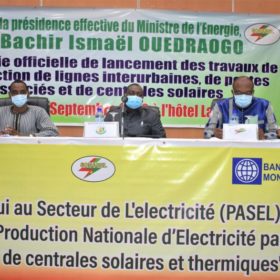
Construction begins on 30 MW of solar in Burkina Faso
Work has started on PV plants with generation capacities of 20 MW and 10 MW. The facilities will be located in Koudougou, in Boulkiemdé province and in Kaya, in Sanmatenga, respectively.
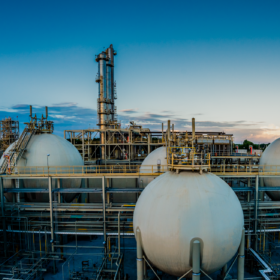
Hemlock Semiconductor becomes vertically integrated polysilicon maker
The U.S. polysilicon manufacturer has acquired DuPont’s trichlorosilane business, in a move that will help it cut production costs and control supply.
Simplified modeling for partially shaded PV systems
A proposed two-diode model is based exclusively on the standard test condition parameters of solar modules and their irradiance levels. The analytical tool reportedly enables PV system operators to estimate the I-V curves of a shaded array quickly and accurately.
