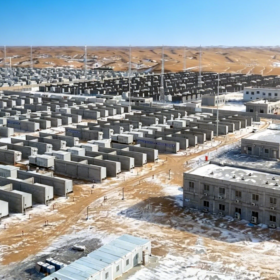
Vanadium flow and lithium-ion combine in world’s largest grid-forming hybrid storage plant in China
China brings online 300 MW/1,200 MWh grid-forming energy storage facility in Inner Mongolia, integrating lithium-ion and vanadium flow battery technologies.
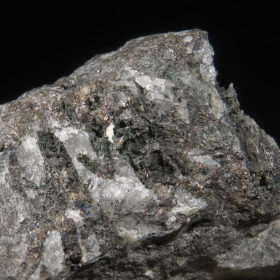
Chinese Academy of Sciences achieves world record efficiency of 15.45% for kesterite solar cell
The cell was fabricated using a new interfacial phase equilibrium strategy that suppressed uncontrollable metal ion migration. The device achieved an exceptionally high open-circuit voltage of over 600 mV at a bandgap of 1.10 eV.

Chinese scientists build ‘ultra-stable’ polymer solar cell with 19.1% efficiency
The polymer solar cell is able to retain 97% of its performance after 2,000 hours in air. By blending small-molecule acceptors into polymeric matrices, the research team improved molecular packing, enhancing both stability and charge transport for “ultra-stable” flexible devices.
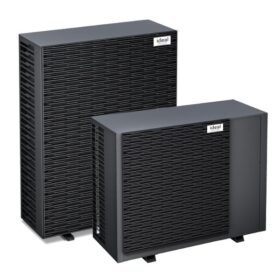
Ideal Heating launches new monobloc propane heat pump for commercial buildings
The UK-based manufacturer has expanded its Ecomod 290HT range with a new 65 kW monobloc air-source heat pump using R290 refrigerant, offering flow temperatures up to 70 C, a COP of 4.6, and cascade capability of up to 7 units.

New model reveals pathway for land-efficient U.S. solar expansion
McGill University researchers used deep-learning computer vision to analyze 719 solar projects across the Western U.S. The study establishes a new “land-sparing” benchmark, providing developers with precise data to balance rapid capacity expansion with conservation and land-use priorities.

Australian startup scaling up printed solar technology
Kardinia Energy has secured AUD 2.15 million from the Australian government’s Industry Growth Program to scale up its flexible, low-cost printed solar technology from university proof-of-concept to pilot manufacturing.
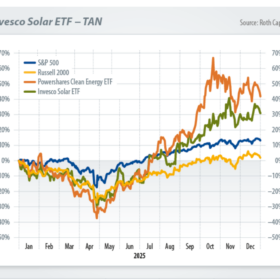
The future of solar is unwritten
Whatever decision the U.S. Department of Commerce makes on polysilicon imports, some market segments are in for a bumpy ride in 2026 as the expiration of tax credits and other policy levers change the trading environment faced by residential installers and others. Jesse Pichel and Lev Seleznov of Roth Capital assess what lies ahead for U.S. solar.

Latvia deploys 258 MW of PV in 2025
With Latvia’s cumulative solar capacity reaching 920 MW by end of 2025, the Latvian Renewable Energy Alliance says the 1 GW threshold may now have been surpassed. The country also appears on track for a record year in solar deployment this year, as some of the largest projects in the pipeline materialize.

Ireland adds 1 GW of solar in 2025
Ireland reached 2,345 MW of installed solar capacity by December 2025, more than tripling installed capacity since 2023, according to Solar Ireland data. The country’s development pipeline has currently reached 1.7 GW.

Austria’s Salzstrom unveils sodium-ion storage system for commercial applications
The new SALT 110 battery storage system from the Vienna-based company has a usable capacity of up to 110 kWh. The storage system is reportedly capable of 6,000 charge cycles at a depth of discharge of 95%.
