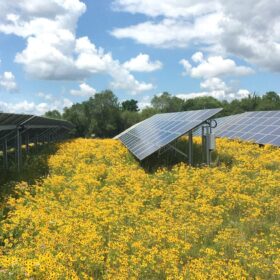
US government offers $45 million for pilot production of PV components
Funding from the US government’s “Investing in America” agenda is intended to support silicon component manufacturing and the development of dual-use PV technologies.
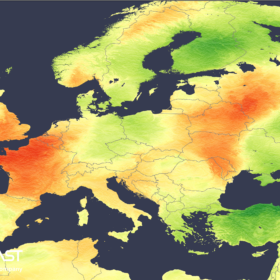
Exceptional June sunshine in England and France as summertime high pressure moves northward
In a new weekly update for pv magazine, Solcast, a DNV company, presents the solar irradiance data it collected for Europe in June. The data show that unusual high pressure over the North Sea caused June’s total irradiation across England and France to be as much as 20% above normal,
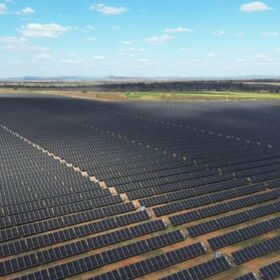
Largest PV plant in Americas goes online in Brazil
Elera Renováveis has commissioned the 1.2 GW Janaúba solar complex. The facility, which went online this week, consists of 20 solar parks spread across 3,000 hectares.
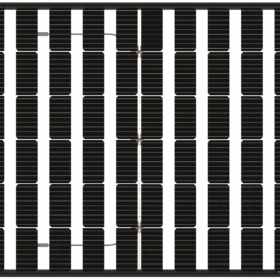
Bisol launches new solar panels for agrivoltaics, carports
Slovenian solar manufacturer Bisol is offering new solar panels with outputs of 320 W and 410 W. Front efficiencies range from 16.4% to 17.3% and the temperature coefficient is -0.34% per degree Celsius.

Gamesa releases new grid-forming central inverter
Spanish manufacturer Gamesa says its new hybrid version of its Proteus inverter can be combined with big batteries. It can work in grid-following and grid-forming mode.
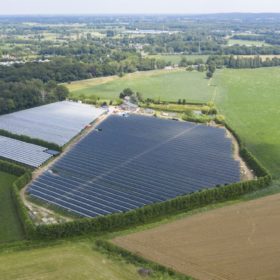
PV covers 18.9% of Dutch electricity demand in H1
Renewable energy accounted for around 49.6% of total electricity demand in the the Netherlands in the first half of this year, according to data from the Nationaal Klimaat Platform.

Ireland extends solar rebates to commercial, industrial PV
The Irish government has decided to grant rebates ranging from €2,700 ($2,930) to €162,600 for PV projects with capacities ranging from 6 kW to 1 MW under the country’s net-metering scheme.
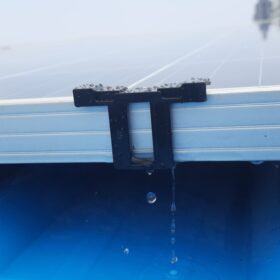
Prasham Greens unveils water-draining clamps for solar panels
India’s Prasham Greens has designed water-draining clamps to get rid of accumulated water from the edges of solar panels after rain and water-based cleaning.
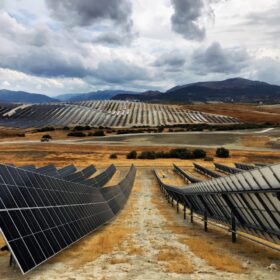
New guidelines for inter-row spacing of PV power plants
A Canadian research group has applied new guidelines for ground coverage ratios to 31 locations in Mexico, the United States, and Canada. It found the new formulae show that the factors affecting inter-row energy yield loss are highly dependent on latitude.
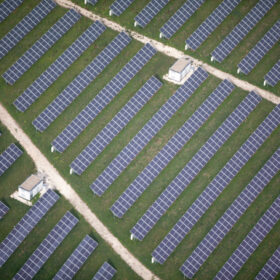
New research claims 85 solar plants in Czechia reached end of lifetime after only 12 years
Data monitoring from 85 PV power plants built in Czechia between 2009 and 2010 show delamination plays a crucial role in significantly reducing their expected lifetime. The scientists behind the research explained that the main cause for the reduced lifetime was due not only to a poor estimation of the technical possibilities of the PV panels at the time of planning and installation, but also to a profit-led approach aimed at lowering the costs of the projects.
