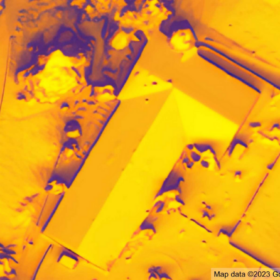
Google to sell rooftop solar mapping data
New application programming interfaces (API) datasets from Google are designed for solar marketplace websites, solar installers, software-as-a-service (SaaS) developers, and users looking to understand the rooftop solar potential of particular addresses.

Japan’s 17th solar auction concludes with lowest bid of $0.061/kWh
Japan’s latest procurement exercise was open to PV projects above 250 kW in size. The lowest price came in at JPY 8.95 ($0.061)/kWh, with 69 MW of allocated capacity.
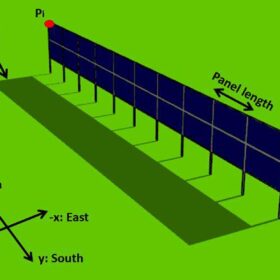
New model to assess effects of shading on crops in agrivoltaic projects
New research shows the importance of calculating the effects of shading created by PV panels on the photosynthetically active radiation (PAR) at the ground level, which is crucial to assessing crop yield in agrivoltaic projects. The proposed modeling considers different agrivoltaic project typologies across several sites in Europe.
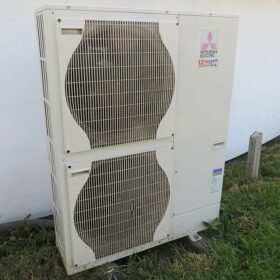
Challenges of integrating heat pumps into existing multifamily houses
New research from Germany shows that most of the heat pumps deployed in existing multifamily buildings may have to operate close to their water temperature operating limit (WTOL), thus being unable to provide elevated temperatures above 60 C. The researchers warned, however, that proper installation proceedings and new types of heat pumps may help solve this issue.
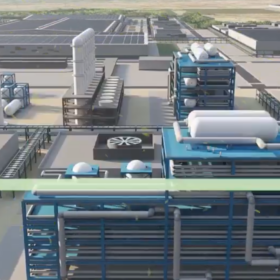
Reliance chairman outlines plans for HJT solar modules, sodium-ion batteries
Mukesh D Ambani, the chairman and managing director of Reliance Industries, says the company aims to open a fully integrated solar gigafactory by the end of 2025. It also plans to initiate megawatt-level sodium-ion cell production by 2025.
Chint secures approval to build 100 MW of solar in Bangladesh
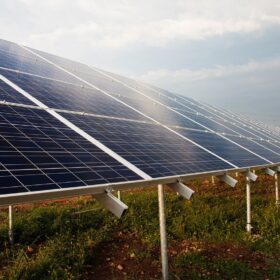
Chint has obtained approval to build a 100 MW solar project in Bangladesh, in order to supply electricity to Bangladesh Power Development Board (BPDB) under a 20-year power purchase agreement (PPA) at a fixed tariff of $0.0998/kWh.
Scientists analyze seasonal performance of rooftop, vertical PV in the Arctic
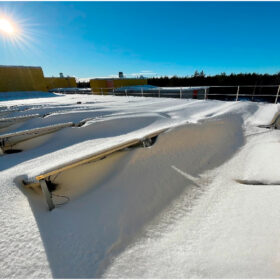
New research from Finland shows that the best season for rooftop PV generation in the Arctic is spring, and that the best tilt angle for rooftop systems is 28 degrees. It also showed that vertical PV installations perform better in winter.
Solar for wildfire detection
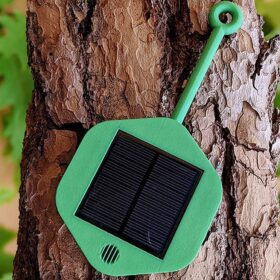
Dryad Networks has developed an AI-powered sensor to detect wildfires and notify first responders.
PV cell technology trends
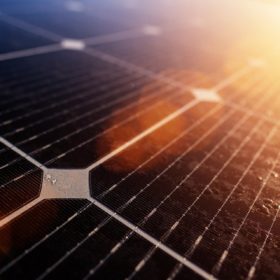
Ongoing innovation in PV cell technology will have major impacts as solar is deployed at a “multi-terawatt scale” over the next two decades, according to a global team of scientists.
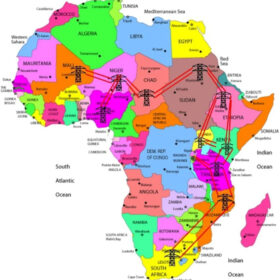
Amea Power secures PPA for 25 MW solar-plus-storage project in Djibouti
Amea Power has secured a power purchase agreement (PPA) for a 25 MW solar-plus-storage project in Djibouti. It will be the country’s first independent power producer (IPP) project and is now in development under a build-own-operate and transfer (BOOT) framework.
