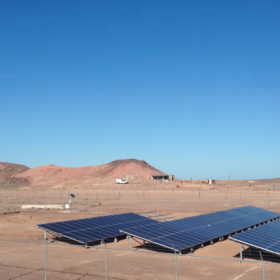
Power-to-gas-to-power designs to incorporate hydrogen in solar-wind microgrids
Researchers in Mexico have looked at integrating hydrogen-based power-to-gas-to-power into an existing rural microgrid. They said this solution could become competitive if electrolyzer, fuel cell and hydrogen tank costs are halved, or if diesel prices keep rising.

New technologies, new opportunities
UK-based analyst Exawatt and Germany’s Nexwafe published a white paper this week that takes a close look at the current state of PV manufacturing worldwide, and how Nexwafe’s innovative wafer production tech might fit into it. They said that if the potential of its Epiwafer can be realized, the PV industry may yet see “another revolution in wafer manufacturing.”
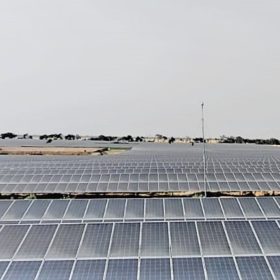
Tata Power commissions 160MW AC solar project for NTPC
Tata Power’s solar manufacturing and EPC unit has commissioned a 160MW AC solar project in the Indian state of Rajasthan.
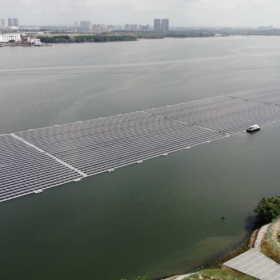
EDP wins project with negative bid in Portugal’s 263MW floating PV tender
Portuguese utility EDP has won the largest project in Portugal’s latest procurement exercise. It has agreed to pay –€4(–$4.39)/MWh for a 15-year contract, but with a 30-year grid connection for the floating array and other renewables projects.

Chinese PV Industry Brief: Zhonghuan raises wafer prices, China Resource Power procures 5GW of modules
Zhonghuan Semiconductor has ramped up wafer prices, China Resource Power has secured 5GW of solar panels, and GCL-Poly is preparing to rebrand as GCL Technology Holdings. China’s Guangxi Zhuang region, meanwhile, has announced plans to deploy 16GW of PV.

Carbon-based, HTL-free perovskite solar cells with 26% efficiency
An international research team has designed a carbon-based perovskite solar cell without a hole transport layer. Two plasmonic nanoparticles – Ag@SiO2 and SiO2@Ag@SiO2 – were added to the cell photoactive layer, in addition to a copper(I) thiocyanate (CuSCN) interlayer at the perovskite-carbon interface.
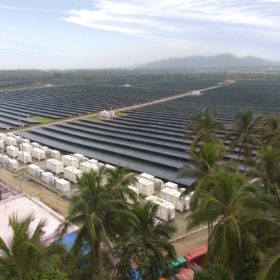
AC Energy, Citicore switch on 72MW solar park in Philippines
AC Energy, the renewable energy unit of Philippines-based conglomerate Ayala Corp., has finished building the 72MW Arayat-Mexico PV plant on the island of Luzon, in cooperation with Manila-based Citicore Power.
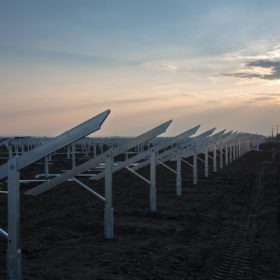
Colombian utility seeks EPC contractors for 83MW solar plant
Empresas Públicas de Medellín is seeking engineering, procurement, and construction specialists to work on an 83MW solar plant in Colombia. The project secured a 15-year power purchase agreement in the nation’s latest auction and is scheduled to go online by Jan. 1, 2023.
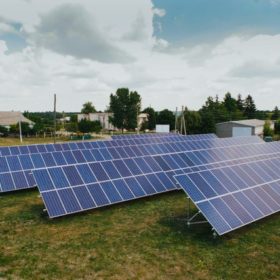
Moldova launches 230MW renewables auction
The Moldovan authorities plan to select projects in a new 230MW renewables auction on a “first come, first served” basis. Installations will be assigned a 15-year fixed tariff. State-owned energy distributor Energocom will be the sole buyer of the clean electricity from the planned projects.
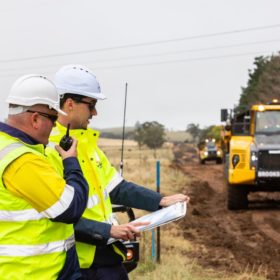
Australia’s largest hybrid solar+battery project hits ‘major milestone’
Australia’s largest hybrid solar and battery project, the New England Solar Farm and Battery Project in northern New South Wales, reached a new milestone over the weekend, following the delivery of the first of two massive 250 MVA transformers.
