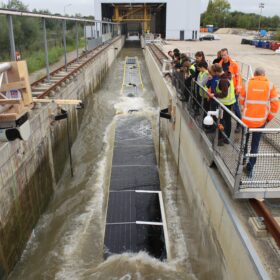
Offshore floating PV enduring world’s largest artificial waves
Offshore PV technologies were tested for the first time under the severe wave loads generated by Delta Flume, a 300 m long man-made flume with a wave generator that is capable of producing waves as tall as five meters. The testing is intended to standardize testing and certification processes for offshore floating PV systems.

Spanish researchers claim nest boxes in PV plants often misused for greenwashing
Researchers in Spain have warned that nest-box installations at PV plants are often poorly planned or used for greenwashing, with boxes placed in unsuitable locations, installed incorrectly, or lacking post-installation monitoring.
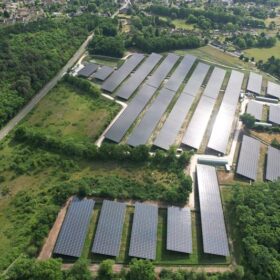
Solar-aviary projects come online in France
French renewables producer Unite has completed two solar-aviary projects selected by France’s Energy Regulatory Commission (CRE) in recent tenders for innovative PV solutions.
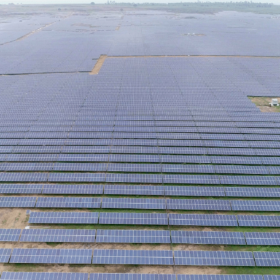
India’s solar potential estimated at 10.8 TW
A new study by the Energy and Resources Institute (TERI) has estimated India’s total solar potential at 10,830 GW, significantly higher than the previous 2014 assessment of 748 GW by the Ministry of New and Renewable Energy (MNRE). The study revisits conventional solar deployment areas such as barren and unculturable lands and explores additional avenues to expand the country’s solar potential.
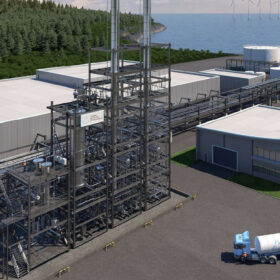
Scientists see potential for 3,000 PV-powered methanol sites in Europe
Researchers have analyzed the potential implementation of green methanol from CO2 capture in existing industries, based on European GIS data. While they found 9,213 theoretically viable municipalities, the number fell to 3,016 when considering the space needed for a PV installation around the plant.

Germany deploys 1.1 GW of PV in May
Germany installed 1.1 GW of new solar in May, bringing total installations for the first five months of 2025 to 5.97 GW, slightly below the 6.16 GW added over the same period in 2024.
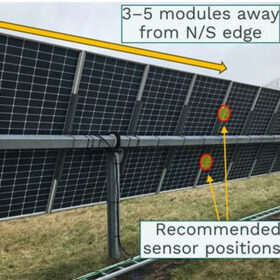
New approach to measure rear plane-of-array irradiance in bifacial PV plants
Researchers in Denmark claim to have identified the best locations for rear plane-of-array irradiance sensors on the back of single-axis trackers in bifacial PV projects. Their work suggests how to reduce sensor quantities while maintaining accurate performance monitoring.
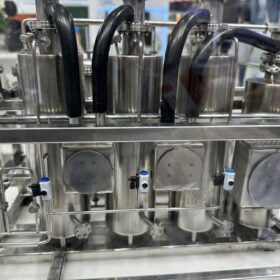
Integrated risk-cost framework for DC-coupled PV-electrolyzers
Scientists in Austria have conducted a risk analysis for four setups for coupled PV-electrolyser systems, and tested them under three use cases. They calculated failure probability as well as the levelized cost of hydrogen and its risk-weighted variant.
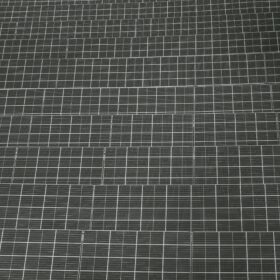
Despite low gas prices, solar, wind remain cheapest sources of power in US
Renewables remain cost-competitive in the United States despite rising natural gas competitiveness, according to Lazard’s 2025 “Levelized Cost of Energy+” report, which estimates combined cycle gas at $0.048/kWh to $0.107/kWh, solar at $0.038/kWh to $0.212/kWh, and nuclear at $0.141/kWh to $0.220/kWh.
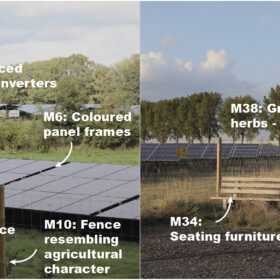
Ecological impact of ground-mounted PV depends on previous land use
Researchers in the Netherlands have identified all major solar power plants in the Dutch Province of Gelderland and have analyzed all of their spatial measures in an effort to assess their impact on landscape. They have specifically focused on land use competition, biodiversity, and landscape experience.
