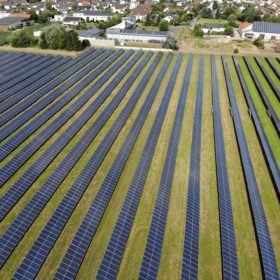
Solar costs have fallen 82% since 2010
The levelized cost of energy generated by large scale solar plants is around $0.068/kWh, compared to $0.378 ten years ago and the price fell 13.1% between 2018 and last year alone, according to figures released by the International Renewable Energy Agency.

Bulgaria plans to introduce FITs for solar systems up to 30 kW
The government is considering a €0.12/kWh feed-in tariff for PV installations with a generation capacity of up to 5 kW and of €0.10 for 5-30 kW systems. If implemented, the scheme will come into force next month.

Israel wants another 15 GW of solar by 2030
Energy minister Yuval Steinitz has announced the country’s 2030 renewable energy target will rise to 30%, with solar expected to account for the lion’s share. Approximately $23 billion more clean energy investment is envisaged this decade.

Covid-19 delayed 63% of India’s planned big solar in first quarter
Coronavirus-related disruption severely impacted solar installation during the first three months of the year, as the nation added only 689 MW of utility scale PV, against the 1,864 MW that was scheduled to be commissioned.

Australian rooftop PV market continues to thrive
Australia’s rooftop PV fleet continues to grow in the face of uncertainty surrounding the outbreak of the pandemic, posting another big month above 200 MW. Mega-household solar systems are growing in popularity, but retailers and installers can see the storm clouds gathering.
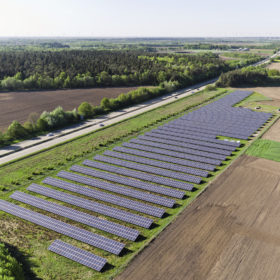
Germany installed 380 MW of solar in April
The rooftop segment maintained strong growth but utility scale PV saw a slowdown on previous months. In the first four months of 2020, newly deployed PV systems added up to 1,479.5 MW of generation capacity, compared with around 1.6 GW in the same period of last year. The nation’s cumulative PV capacity hit 50.46 GW at the end of April.
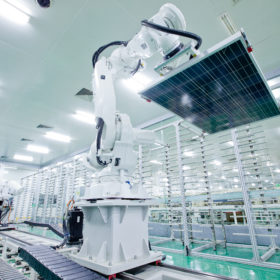
Chinese PV Industry Brief: Jinko’s new capacity and a 200 MW solar park
JinkoSolar has begun construction of a new 16 GW module production base in Yiwu city, Zhejiang province and Eging PV has resumed a 200 MW solar project in Qitai county in the Xinjiang Uygur Autonomous Region, after securing approval from local authorities. The China National Energy Administration has confirmed the nation can add no more than 48.45 GW of solar to the grid this year.

Armenia kicks off 200 MW solar park tender
The AYG-1 project, planned in the Aragatsotn province of western Armenia, will be 85% owned by the successful developer and 15% by the Armenia Renewable Resources and Energy Efficiency Fund (Anif).
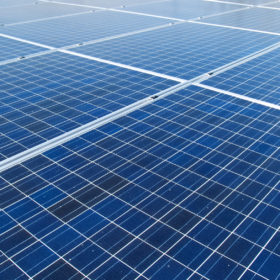
Omani oil provider switches on 100 MW solar park
The PV plant is located at Amin, in the southern desert region of the sultanate. The project, tendered by Petroleum Development Oman in early 2018, was built by a consortium led by the Japanese Marubeni conglomerate.

Mitigating shading in PV modules with new reconfiguration technique
Scientists in India are seeking to mitigate partial shading with a technique based on the Lo Shu nine-square grid of ancient Chinese mathematical tradition. Their approach features the ‘magic grid’ also used in popular sudoku puzzles, as a guide for reconfiguring arrays.
