Best practices for end-of-life PV management
SolarPower Europe says it expects some of the European Union’s solar fleet to reach end-of-life (EoL) status within the next decade. Its new report outlines sustainable methods for handling EoL solar panels.
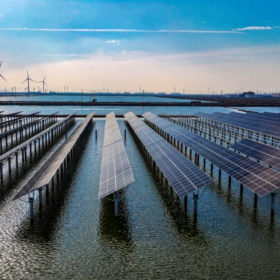
China’s new PV installations hit 216.88 GW in 2023
China’s National Energy Administration (NEA) has revealed that China’s cumulative PV capacity reached 609.49 GW at the end of 2023.
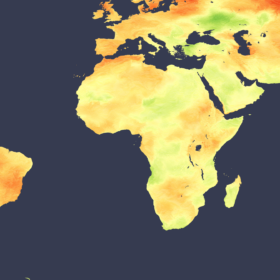
2023 delivers best year this century for irradiance
In a new weekly update for pv magazine, Solcast, a DNV company, reports that, last year, large regions were 10% or more above long term trends for solar radiation, including Western and Northern Europe, Eurasia, much of China, Southern Australia, the Midwestern and Southern US, Central and most of South America.
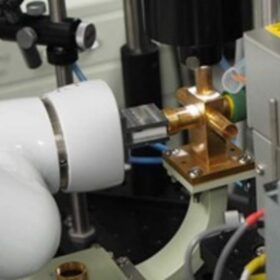
Robotic measurement system assesses new materials for solar cells
Researchers in Japan have developed an automated system to perform photoabsorption and photoluminescence spectroscopy, optical microscopy, and white-light flash time-resolved microwave conductivity tests.

Vitamin C treatment improves stability of inverted organic solar cells
Danish researchers report that treating non-fullerene acceptor-based organic solar cells with vitamin C provides an antioxidant activity that alleviates the degradative processes arising from heat, light, and oxygen exposure. The cell achieved a power conversion efficiency of 9.97 %, an open-circuit voltage of 0.69 V, a short-circuit current density of 21.57 mA/cm2, and a fill factor of 66%.

Key takeaways from SunRise Arabia conference
Saudi Arabia has laid out an ambitious vision to establish itself as a renewable energy hub for the Middle East and beyond. The market is growing rapidly, with solar generation capacity more than tripling in 2023. But obstacles remain for the Kingdom to continue on this PV pathway, and these challenges were up for discussion this week in Riyadh at the SunRise Arabia conference, organized by Solarabic and pv magazine.
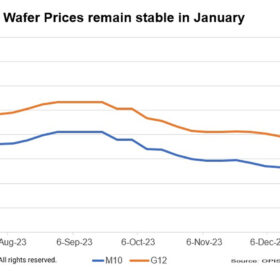
Wafer prices stable ahead of Chinese New Year festivities
In a new weekly update for pv magazine, OPIS, a Dow Jones company, provides a quick look at the main price trends in the global PV industry.
Mauritania secures $289.5 million for solar projects, interconnection line
The authorities in Mauritania have obtained $289.5 million of financing for two solar projects, including a $272 million loan – the largest ever granted to the country by the African Development Bank – for a recently approved 225 kV electricity interconnection.
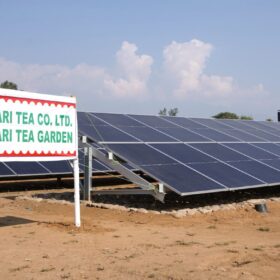
Tata Power lights up Indian tea estate with bifacial PV system
Tata Power Renewable Energy has commissioned a 1.04 MW solar system for the Chengmari Tea Estate in India. The installation features 1,900 bifacial PV modules.
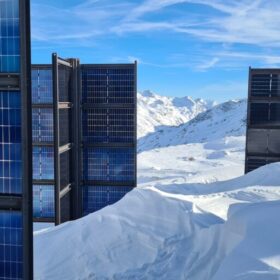
Austrian ski resort hosting vertical PV arrays with cross structures
Helioplant has developed a 7.2 kW vertical PV installation for high-altitude locations. The system purportedly remains free of snow, even after intense winter precipitation.
