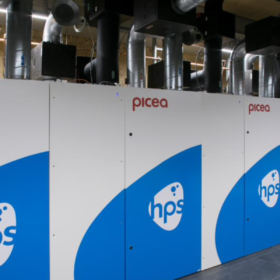
New solution to store residential, commercial PV electricity as green hydrogen
Germany’s Home Power Solutions has developed a hydrogen storage solution with a capacity of up to 15,000 kWh. The Picea system stores excess electricity from rooftop PV systems in the form of green hydrogen.
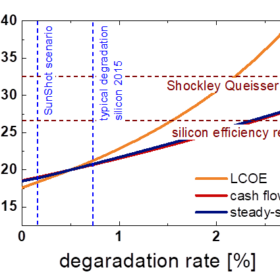
New metric for 50-year solar plant operation
A German-U.S. research group has proposed a new model to treat PV installations as permanent assets, with maintenance being performed at regular intervals. Through the new metric, it found more convenient to operate a module with 0.5% annual degradation for 35 years, and a module with 0.2% degradation, for 50 years.
EU prepares way for 0% VAT on several goods, solar panels for residential use now on proposed list
The European Council has approved a proposal to amend the EU rules on rates of value-added tax (VAT) to give member states more flexibility to set them. If adopted, solar panels for residential and ‘public interest’ applications would be included in the list of goods and services for which a maximum of 5% VAT could be levied.
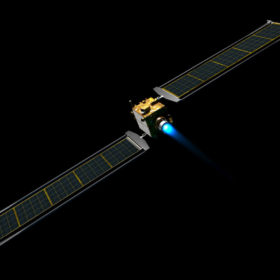
NASA to test solar-powered propulsion for asteroid defense
NASA’s Double Asteroid Redirection Test mission will roll out solar arrays and an electric propulsion system to redirect Earth-bound asteroids.
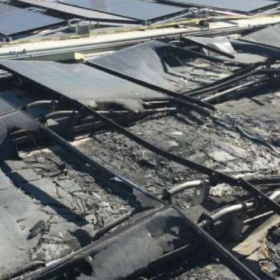
U.S. Securities and Exchange Commission investigates Tesla over alleged solar system fire negligence
The lawsuit stems from a 2019 whistleblower complaint alleging that the company failed to properly notify its shareholders, customers and the public of fire risks associated with solar panel system defects over the course of several years.
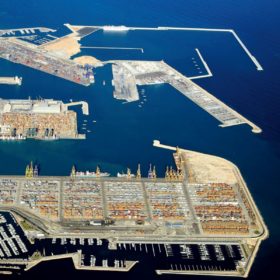
The Hydrogen Stream: ‘China, Chile, Spain and Australia will lead the hydrogen economy’
The International Energy Agency said the four nations are on track to contribute 85% of the 18 GW of global renewables capacity which is set to be dedicated to green hydrogen production by 2026. Elsewhere, the Port of Valencia has unveiled a plan to install a green hydrogen supply station in the new year.
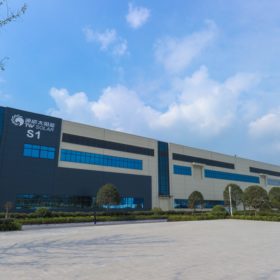
Chinese PV Industry Brief: Shuangliang secures three more wafer deals, Petro China’s 4.5 GW module deal
Shuangliang has secured supply agreements from Xinchao PV, Canadia Solar and SF Solar. Petro China wants modules for 4.5 GW of solar projects across 24 provinces.
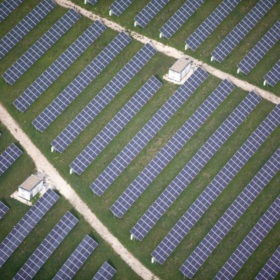
Higher module prices impacting Czechia’s rebate program for small solar parks
The Czech authorities have extended, to February, the deadline to submit PV projects of up to 1 MW for the rebate scheme for small sized, ground mounted photovoltaics. According to Jan Krčmář, chairman of the Czech Solar Association, the lower than expected interest in the program may also be down to higher PV component prices.
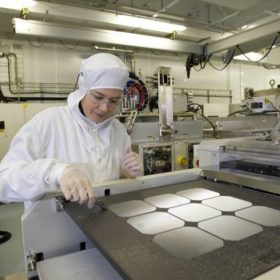
Ultra-thin silicon layers for 22.2%-efficient heterojunction solar cell
Scientists in the Netherlands fabricated a heterojunction solar cell with a layer of hydrogenated nanocrystalline silicon just three nanometers thick. The cell’s efficiency was measured at 22.2%, below the highest achieved with HJT cells, however, the researchers note that successfully incorporating this material into the cell stack will open many new doors for improvement.
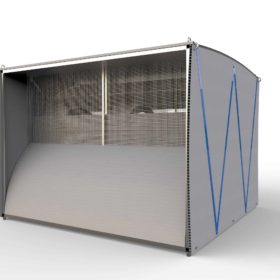
Hybrid wind-solar generator for rooftop applications
French startup Wind my Roof has developed a new wind power system equipped with two rooftop PV modules. It is currently testing a prototype in Paris.
