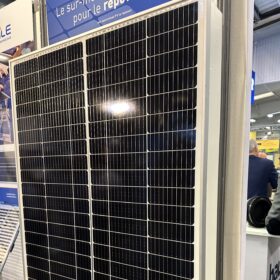
France’s S’tile offers custom PV modules for repowering, revamping
S’tile has launched fully customized solar modules for repowering and revamping rooftop PV systems, providing exact-fit replacements or higher-output upgrades tailored to each project.
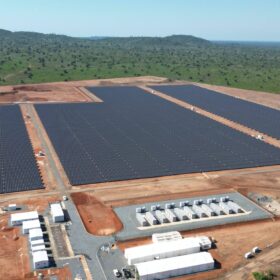
Africa’s largest off-grid solar-plus-storage project comes online in Angola
In Angola, 75.26 MWh of battery storage has begun operating as part of Africa’s largest off-grid renewable energy system to date.
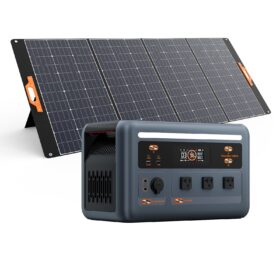
Oscal launches 1,024 Wh portable storage system
The Chinese company said its Power Max 1800 SE has a rated power of 1.8 kW and a surge power of 2.4 kW. It weighs 15.5 kg and measures 39 cm x 23 cm x 25.4 cm.

Calefa Oy releases waste heat-powered steam heat pump
The Finnish company said its novel AmbiSteam system can produce process steam above 5 bar. It is based on the company’s SteamLevel heat pump technology.
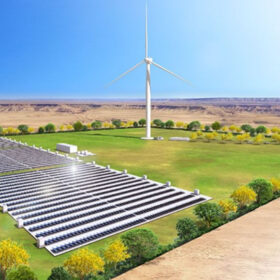
Toshiba ESS tests hybrid wind-solar project with storage in Saudi Arabia
Toshiba Energy Systems & Solutions Corp. (Toshiba ESS) has started testing batteries and energy management solutions to stabilize electricity in remote Saudi Arabia through a hybrid wind-solar pilot project. The project will run until May 2028 to evaluate power- and energy-oriented batteries and optimize battery use.

Agrivoltaics for biomethane
Researchers in Italy have simulated an agrivoltaic-powered anaerobic digestion plant for biomethane production and optimized it across eight scenarios, using vertically mounted panels in some cases with one-axis tracker and with two-axis trackers in others.

Japan’s 26th solar auction concludes with average final price of $0.046/kWh
Japan has allocated 75.3 MW of PV capacity in its latest procurement exercise. The lowest price in the auction was JPY 4.97 ($0.032) /kWh.
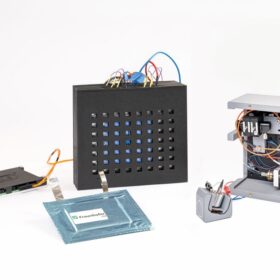
World’s first high-power aluminum-ion battery system for energy storage
For the first time, a complete aluminum-graphite-dual-ion battery system has been built and tested, showing that lithium-free, high-power batteries can deliver stability, fast response, and recyclability for next-generation grid applications.
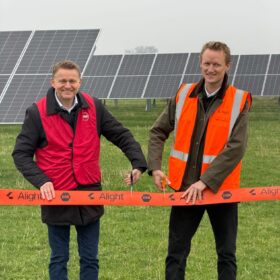
Denmark’s second largest PV plant goes online
Swedish independent power producer Alight has completed a 215 MW solar project in Lolland, southern Denmark. The construction of Lidsø solar park started in the summer of 2024.
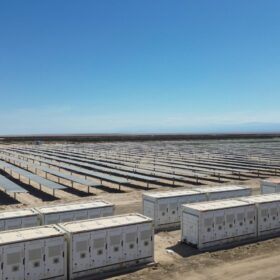
Brazil adopts legal framework for battery storage
Brazil published Law 15.296 on November 25, establishing a series of changes to laws in its electricity sector including guidelines for the regulation of storage systems, tax exemptions and the reduction of import tax rates on battery energy storage systems and its components to zero.
