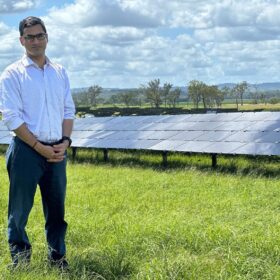
Australia startup offers all-in-one O&M tech to save solar farms millions
A Queensland tech start-up says it has developed an AI-based all-in-one solar farm operation and maintenance system that promises to boost the reliability of solar projects and could save the renewable energy industry $200 million a year.

California has become rooftop solar and batteries NEM-esis
The transition to California’s new net metering, ‘NEM 3.0,’ regime was justified, in part, as a way to support residential energy storage installations but the state policy has pushed rooftop solar off a cliff.
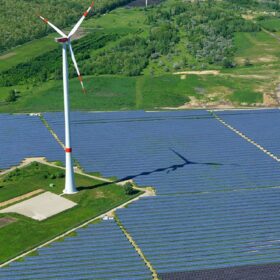
KKR set to potentially acquire Encavis
Encavis operates 2.2 GW of wind and PV assets across 12 European countries.

Adani Green switches on 1 GW of 30 GW Khavda renewables park
Adani Green Energy Ltd has started operating 1 GW of solar at India’s planned 30 GW Khavda RE park in less than 12 months of commencing work at the site.

Top US states for solar deployment in 2023
The Solar Energy Industries Association (SEIA) has released an overview of the top US states for solar installations last year.
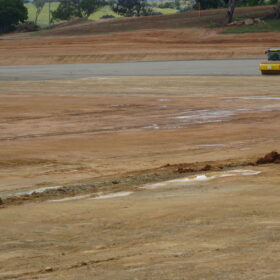
New tool to calculate efficient earthworks for ground-mounted PV
A unit of French construction group Vinci has developed a new tool to ensure efficient earthworks for ground-mounted PV systems, with a focus on optimization parameters, design restrictions, allowable slopes for mounting structures, and terrain adaptation.
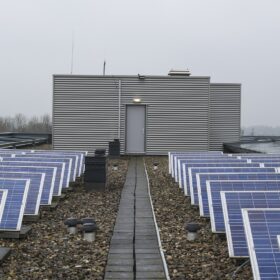
NatPower pledges £10 billion for battery storage rollout in the UK
NatPower UK says it will bring over 60 GWh of battery storage online in the UK by 2040. It has already set aside GBP 600 million ($769.8 million) for the development of substations and says large-scale solar and wind projects will be announced later this year.
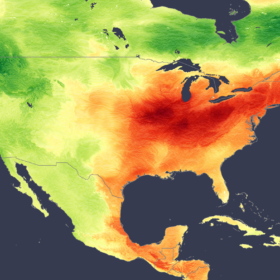
Weather records tumble across U.S. as Atlantic pressure keeps eastern skies clear
In a new weekly update for pv magazine, Solcast, a DNV company, reports that persistent high pressure in the upper atmosphere led to irradiance as high as 30% above normal, and new records for solar generation and temperature in North America in mid-February.
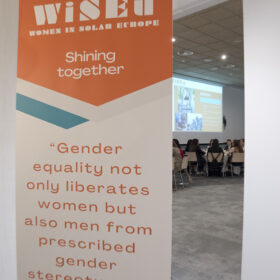
Why gender equality might be the better business opportunity in the solar energy industry within the next decade
In the first article of a series, Women in Solar Europe (WiSEu) presents data showing that we still have plenty of work to overcome external and internal barriers preventing women from pursuing STEM careers, accessing leadership roles, and being fairly represented across the whole value chain in the solar industry.
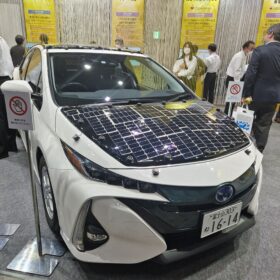
PV-powered cars and the parking dilemma
Researchers in Portugal have addressed the so-called ‘parking dilemma’ of electric cars incorporating photovoltaic modules. They looked into the tradeoff between charging the car and raising its inside temperature. They calculated the critical time as a function of the car’s solar capacity.
