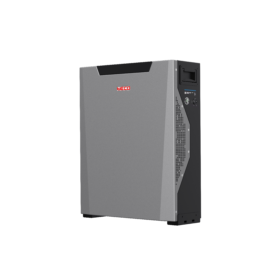
Smarter E Products: Stackable dual-voltage battery from Weco
Weco’s new 5.3 kWh battery can be used as a wall solution or in a stackable configuration. Up to 15 modules can be stacked without additional components, thanks to a special casing.
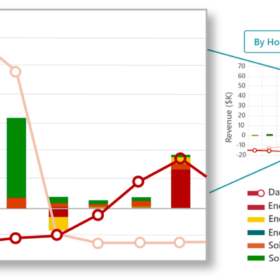
UL releases modeling software for utility-scale energy storage
UL’s new HOMER Front software is designed for standalone use, or hybrid solar and wind-plus-storage applications, with the aim of maximizing revenue streams.
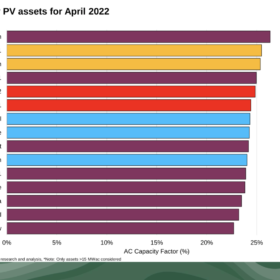
Australia’s best-performing, large-scale PV assets
The top-performing solar farm in Australia in April was Genex Power’s Kidston project in Queensland, according to Rystad Energy Analyst Dave Dixon, who noted that total generation from solar and wind assets in Australia grew by 23% year on year.
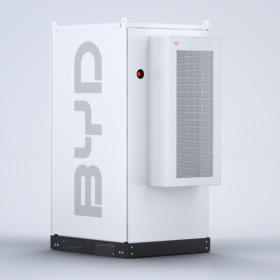
Smarter E Products: C&I battery from BYD
Chinese battery manufacturer BYD will this week introduce an expanded portfolio of energy storage systems designed for the commercial and industrial solar markets. At The smarter E, the company will also offer a sneak peak at a new high-voltage storage system expected to be launched later this year.
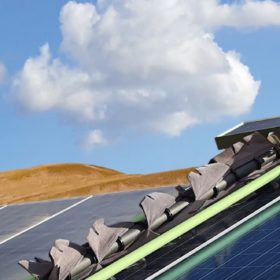
Smarter E Products: New solar module cleaning solution from Ecoppia
The solar cleaning system moves horizontally and cleans the panels vertically, while a patented auto-switch allows the robot to clean from either side of the module row, which the manufacturer said minimizes cleaning time. The device weighs up to 50 kg and has a cleaning speed of 22 m per minute.
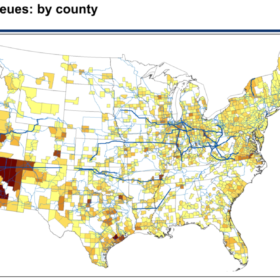
US developers working on 858 GWdc of solar, 1 TWh of batteries
US government research shows that solar-plus-storage is starting to dominate the nation’s power grid queues, representing the majority of new power plant applications.
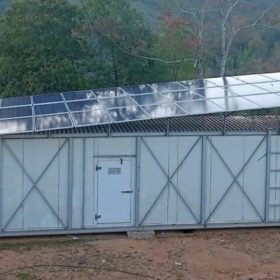
Multi-chamber solar cold storage system
India-based Inficold has developed a multi-chamber, solar-powered cold storage solution that facilitates the storage of multiple perishable commodities in different temperature-controlled chambers, all under their respective ideal storage conditions.
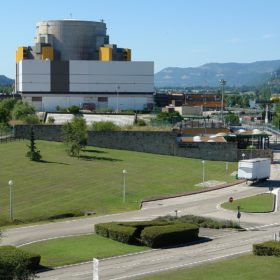
EDF building solar park at closed nuclear plant in France
EDF Renouvelables expects to switch on a solar array at a nuclear plant in France in early 2023. It will rely on 22,000 solar modules. The Creys-Malville nuclear plant, which was shut down in 1997, is set to be dismantled by 2024.
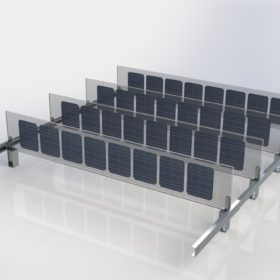
Smarter E Products: Vertical PV system for green rooftops
Norwegian startup Over Easy Solar AS is launching a vertical PV system for rooftop applications at this year’s Smarter E in Munich, Germany.
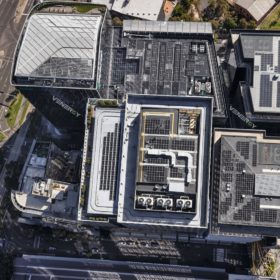
Solar tech to trigger switch for skyscrapers
Energy systems have long been designed to deliver electricity to major cities from distant hubs. But now, thanks to recent advances in solar panel energy density and building-integrated PV, vertical cities could soon be standing tall under their own power.
