
After a suppressed first quarter, the US solar market is buoyed by tariff suspension
The Wood Mackenzie/SEIA US Solar Market Insight Q1 report finds that the two-year suspension on new solar tariffs is just a start. Passage of further clean energy legislation could boost US solar installations 66% in the next decade.

New tool to increase social acceptance of solar parks
Thanks to a traceability tool, individuals, companies and local authorities who have signed an electricity supply contract with French energy provider Volterres can monitor in real time the source of their electricity supply, and in particular the share of electricity coming directly from renewable energy plants located nearby.

Maruti Suzuki switches on 20 MW solar carport in India
The carport can host about 9,000 vehicles and meet 11.5 % of the total electricity requirements of Maruti Suzuki’s factory in Haryana.

Butterflies, bees, sheep, and solar energy production can coexist
EDF Renewables maintains a 23.4 MW agrivoltaic facility that supports local wildlife and agriculture. Since it was installed in 2009, the project pioneered efforts in supporting bees, butterflies, and sheep grazing.
Challenges and prospects in the Polish PV market
pv magazine spoke with Marcin Jedrachowicz, sales manager for Eastern Europe at JinkoSolar, about the challenges and prospects of the thriving Polish solar sector. According to him, photovoltaics has now reached full maturity in the country and its growth rate is comparable to that of Europe’s largest PV markets.
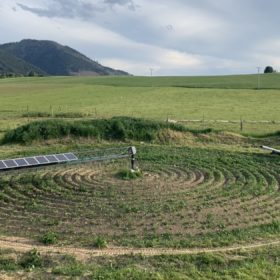
Solar arm for agrivoltaic applications
A Slovakian startup has developed a photovoltaic-integrated arm that provides off-grid power for weeding and other small agricultural applications. In its largest configuration, the system is 18 meters long, has a capacity of 2.4 kW, and is able to cover a cultivated area of 994 m².
O2 Power switches on 250 MW solar project in India
The project is located in the Jaisalmer district and is selling power to the Solar Energy Corporation of India under a 25-year power purchase agreement.

ReNew signs 200 MW solar PPA, acquires over 500 MW of renewable projects
Indian energy developer ReNew has agreed to acquire more than 500 MW of operational wind and solar assets. It has also signed a 200 MW power purchase agreement with Maharashtra State Electricity Distribution Co. Ltd.
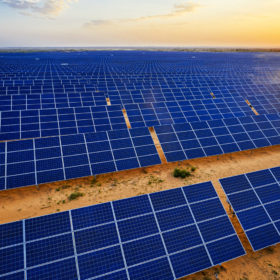
Jakson switches on 70 MW Amguri solar park in India
India’s Jakson Group has developed a 70 MW solar project with engineering, procurement and construction done in-house. The plant will supply electricity to Assam Power Distribution.
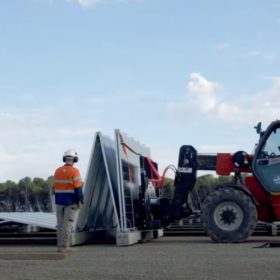
Australian prefabricated solar array manufacturer raises $21.8 million
5B has completed a AUD 30 million ($21.8 million) Series B funding round with its existing shareholders to help fund the development of its flagship modular Maverick solar array, while also accelerating the progress of the company’s pipeline of multi-megawatt projects.
