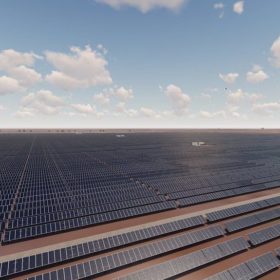
Simec ‘gearing up’ to start work on 280MW South Australian solar farm
Work on the long-awaited 280MW Cultana Solar Farm in South Australia appears set to begin with Simec Energy Australia announcing this week it is preparing to start construction on the $350 million project.
US legislation introduced to build renewable energy ‘superhighway’
Sen. Ed Markey’s Charge Act requires forward-looking transmission planning by utilities to lower prices and improve reliability. Among other sweeping changes, the bill requires hourly operational and greenhouse gas emissions reporting in a timely manner.
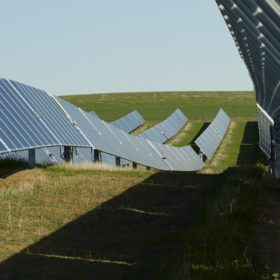
Nextracker unveils new tracker for sloping ground
The NX Horizon-XTR tracker can be used with all types of modules and is claimed to be an ideal solution for sloping, uneven, and demanding terrain.
Austria allocates another €250million for wind and solar
The new funds are part of a package of measures aimed at reducing the effects of the energy crisis triggered by the war in Ukraine.
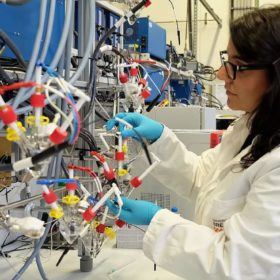
The case for aqueous zinc-ion batteries
Scientists in Germany have identified the main challenges that are preventing aqueous zinc-ion batteries (ZIBs) from becoming a mainstream storage technology for power grid applications. According to their analysis, the two main hurdles that must be overcome in future research are the increase of the specific energy of the full Zn-ion cell and the prevention of the parasitic hydrogen evolution reaction occurring during the Zn electrodeposition step.
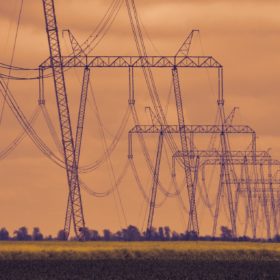
Upgrading US transmission lines could enable 27GW more renewable power per year
“Advanced conductors” can deliver more electricity than conventional transmission lines, using existing transmission towers. Renewables trade group ACORE calls for greater use of advanced conductors, “to accelerate low-cost decarbonization.”

Mauritius launches tenders for 140MW of solar-plus-storage
Through two different procurement exercises, the archipelago’s Central Electricity Board seeks to reduce its dependence on fossil fuels.
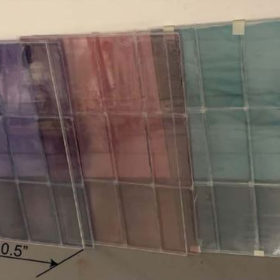
Semi-transparent organic photovoltaic filters for agrivoltaic greenhouses
Researchers in the United States have tested organic photovoltaic filters in a greenhouse hosting lettuce growth and have found the devices’ transmission spectra may help fine-tune the characteristics of the plant. They used transcriptomic analysis to assess the key modifications of the plants grown under the solar filters.
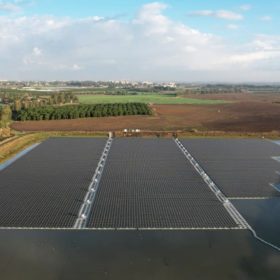
Floating solar-plus-hydroelectric project planned on Indian dam
Renewable energy developers have until April 25 to lodge interest in developing a hybrid facility combining 1.5MW of hydroelectric generation capacity and 100MW of floating solar in the state of Maharashtra.

Netherlands sets €13bn budget for 2022 SDE+ program, green hydrogen included for first time
Starting from this year, the scheme will also be open to green hydrogen facilities that are directly linked to wind or solar parks, and industrial electrification projects based on hybrid glass furnaces.
