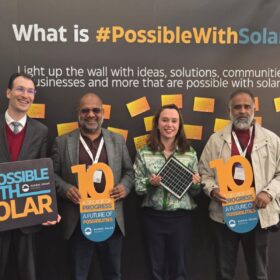
Solar can deliver growth, competitiveness, and resilience all over the world
Solar is so scalable, so versatile, that every single country in the world, every single human on the planet from the frozen North to the deepest rainforests, from the dry, arid plains of the Atacama to the buzzing metropolises of New York, Paris, São Paulo, Shanghai and Tokyo can benefit from it.
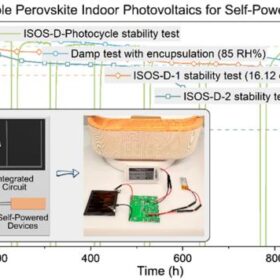
Scientists build 42.01%-efficient indoor PV cell for self-powered devices
An international researc team has included an interlocked self-assembled monolayer in perovskite indoor PV to enhance its stability and durability. Fabricating cells, mini modules, and a prototype device of an electronic price tag, the novel structure was tested. It was found to exhibit a lifetime approaching 6,000 hours.
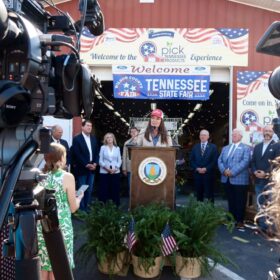
USDA announces it will discontinue funding solar projects
The U.S. Department of Agriculture has awarded billions in Rural Energy for America Program (REAP) grants for solar projects. Secretary Brook Rollins said the agency will no longer deploy funds to solar and wind projects.
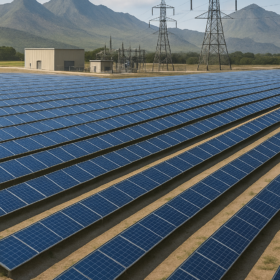
How to control frequency fluctuations during PV plant deloading
Researchers in Egypt have developed new control strategies for managing frequency fluctuations during deloading of a photovoltaic plant. The proposed methodology combines a proportional–integral controller along with a rate of change of frequency controller.
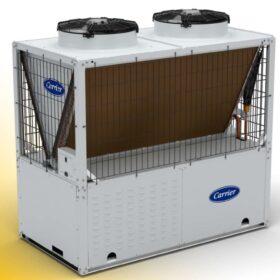
Carrier launches new air-to-water heat pumps for commercial applications
Carrier, a US-based heating solutions provider, said its new AquaSnap 30RQM heat pump system can deliver a water temperature of up to 60 C. The modular system features a heating capacity of 70 kW to 1,125 kW and a cooling capacity of 77 kW to 1,237 kW. T
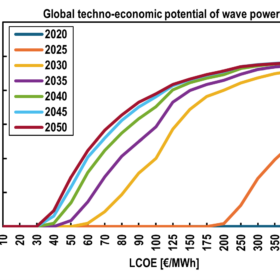
Wave power poised to complement solar PV in future global energy mix
Wave power may emerge as a valuable renewable energy source given recent economic and technical projections indicating a substantial potential of wave energy, particularly in coastal and island regions. Wave and solar resources are complementary around the world and thus may lead to energy systems combining solar PV with wave power. Islands may benefit most from wave power added to solar PV.
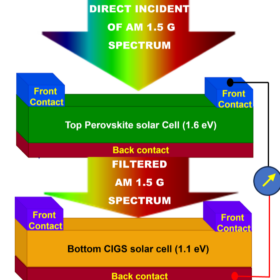
First attempt to build lead-free perovskite-CIGS tandem solar cells
Indian researchers simulated a novel pairing of a CsGeI3 lead-free halide perovskite top cell with a copper-indium-gallium-selenide bottom cell. The resulting tandem device has the potential to achieve a power conversion efficiency of 26.06%
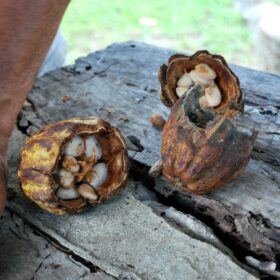
Photovoltaics for cocoa pod splitting
Scientists have designed a cocoa pod splitting device that runs on five monocrystalline PV panels. They have simulated its operation and have found it can achieve a splitting efficiency of 98.92%.
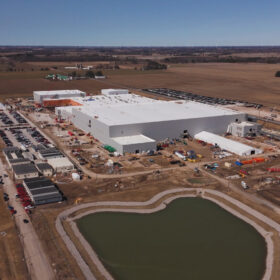
Corning, T1 Energy agree to U.S. domestic solar polysilicon, wafer supply deal
The partnership supports a full domestic energy supply chain from raw polysilicon to finished solar panels.

Germany deploys 1.4 GW of solar in July
Germany added 8.65 GW of new photovoltaic capacity in the first seven months of this year, according to the Federal Network Agency (Bundesnetzagentur), bringing cumulative solar deployments to more than 109 GW.
