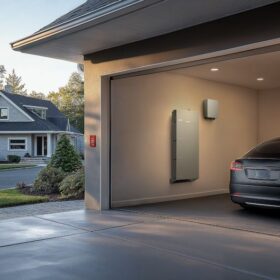
EcoFlow launches energy management system providing whole-home backup
Global energy company EcoFlow’s latest product, Gateway, is a wall mounted hardware system that can be installed indoors or outdoors and is compatible with third-party inverters and diesel generators as well as EcoFlow’s own extensive product suite.
Renewables overbuilding, proactive curtailment can reduce Europe’s energy system costs
New research from the Netherlands showed that renewables and short-term storage can meet around 92.5% of Europe’s electricity demand in future energy scenarios, with the remaining 7.5% being satisfied by green hydrogen. The scientists considered Europe as fully self-sufficient with zero import-export of power or hydrogen, with each of the 37 countries included in the modeling having a self-sufficiency rate of at least 80%.

Malaysian utility launches rebate program for residential PV
Sarawak Energy says it will grant rebates of up to $2,800 for PV systems planned to operate under Malaysia’s net metering scheme.
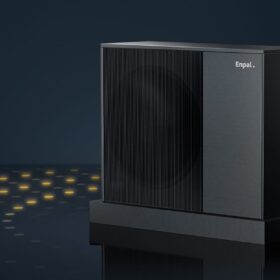
Enpal unveils residential heat pump for large heating loads
The German company is introducing its own heat pump with a heating output of up to 16 kW and a maximum flow temperature of 80 C. The system is designed to meet rising demand in large single-family homes and unrenovated existing buildings.
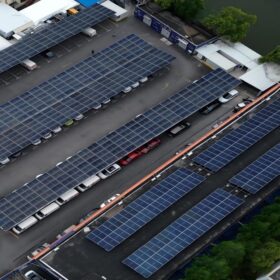
Optimization strategy for PV-powered EV charging stations relying on V2G
Scientists in China have created an optimization technique for an electric vehicle charging station that uses PV, battery storage, and a vehicle-to-grid operation. Considering the uncertainty of PV generation and the randomness of EV load, the system uses two-level optimization, day-ahead and intra-day.

Solar-Fabrik debuts back-contact solar module for residential, C&I applications
The German manufacturer said its full-black back-contact solar panel has a power conversion efficiency of up to 23.52%.
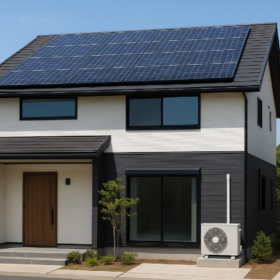
Making the business case for solar-plus-storage with heat-pumps in Japan
A Japanese research team has evaluated the affordability of photovoltaic-battery systems featuring heat-pump water heaters and air conditioning units across nine regions of Japan. They analyzed three price policies and two loan types, identifiying a tradeoff between net demand and cost according to the capacity of the solar-plus-storage system.
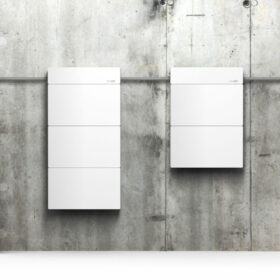
SolarEdge unveils all-in-one residential inverter and clickable modular battery system
The stackable battery ranges 4.9 kWh to 19.6 kWh per unit while the inverter is available in ranges from 3.8 kW to 13 kW. The company also introduced a meter socket adapter to avoid triggering costly main panel upgrades.
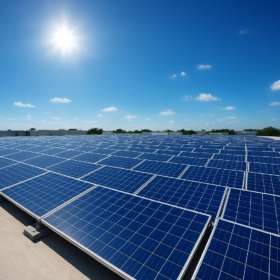
NREL researchers warn of unexpectedly high UV-induced degradation in n-type solar modules
A research team from the U.S. National Renewable Energy Laboratory has analyzed n-type modules deployed in a 3 MW commercial PV project in an effort to assess the high degradation rate reported by the plant owner. The scientists found that ultraviolet-induced degradation (UVID) was a major factor affecting the facility’s performance.

Flanders reaches 81% digital meter adoption among solar homes
By the end of 2025, installing a smart meter will be mandatory for PV-powered homes in Belgium’s Flanders region. According to grid operator Fluvius, a group of homeowners who installed solar panels between 2014 and the end of 2020 remain eligible for a retroactive investment premium.
