
France adds 4.2 GW of solar in first nine months of 2025
Statistics from Enedis show that 4.2 GW of solar connected to France’s grid in the January-September period, including 82 MW paired with storage, marking a slight decline from 2024.
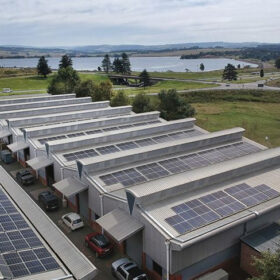
South Africa simplifies registration process for distributed PV
South African utility Eskom is urging consumers with grid-tied rooftop solar to register their systems and integrate them with the national grid, waiving registration fees until March 2026.
Optimizing solar-plus-storage operation for markets with imbalance penalties
Scientists in Japan have used a deep reinforcement learning–based AI model to calculate discrepancies between the planned and actual electricity supply volumes in PV-battery systems operating in markets where grid imbalances are penalized. Through a series of simulations, they found that the proposed methodology can reduce imbalance penalties by approximately 47%.

Romania drafts cybersecurity rules for PV, cogeneration up to 1 MW
Romania plans to amend its energy law to require the National Cybersecurity Directorate (DNSC) to define technical standards for PV and cogeneration systems up to 1 MW, aimed at preventing data breaches and safeguarding grid operations.

Deployable tracker-based rooftop PV system for stadiums
An international research team has developed a tracker-based rooftop PV system that can be installed on both new and existing stadiums. The proposed design reportedly allows for easier deployment and delivers higher power output compared to conventional stadium PV covers.

France certifies first solar panels eligible for reduced 5.5% VAT
France’s Certisolis approved four Voltec Solar panels and one Meyer Burger module with carbon footprints under 530 kg CO₂/kWp, making them potentially eligible for the country’s 5.5% VAT rate.
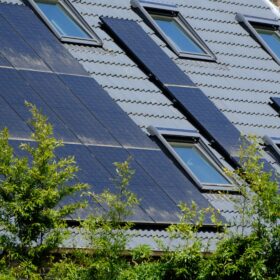
Ten reasons why behind-the-meter solar is a benefit
Behind-the-meter solar for homes, businesses, and communities comes with numerous benefits, said a paper from Stanford engineering professor Mark Jacobson.
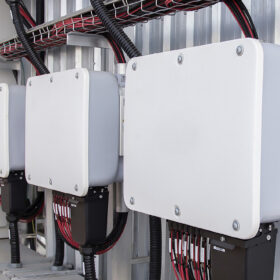
Improving solar inverter design with silicones
Inverters must withstand the high levels of heat generated when operating, otherwise system performance and reliability could be at risk. Cody Schoener of Dow Performance Silicones argues using silicone-based materials for inverters can improve thermal management and fire protection, while offering thermal stability, environmental resistance, electrical isolation and support for operational efficiency.

Supermarket EV chargers in Berlin could improve efficiency by over 250%
German researchers say shared-use and digital brokerage models could lift utilization and profitability of supermarket EV charging stations by up to 255%.
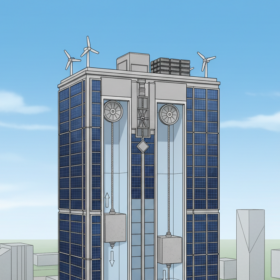
High-rise buildings could soon use gravity energy storage, say researchers
Researchers in Canada have proposed using gravity-based energy storage in high-rise buildings, in combination with photovoltaic facades, small wind turbines, and lithium-ion batteries. Their modeling indicated that this hybrid system could achieve a levelized cost of energy ranging from $0.051/kWh to $0.111/kWh.
