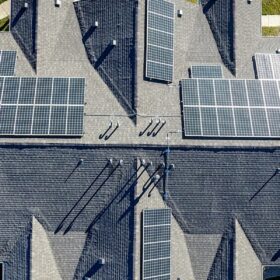
Germany deploys 16.2 GW of solar in 2024
Germany installed 16.2 GW of solar in 2024, bringing total PV capacity to 99.3 GW by the end of December 2024, according to the Federal Network Agency (Bundesnetzagentur).
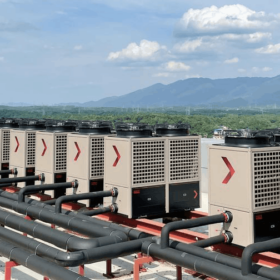
Phnix releases PV-ready heat pumps for commercial buildings
The Chinese manufacturer said the latest version of its Phnix HeatMaster heat pump series enables seamless integration with PV arrays. The systems have a coefficient of performance of up to 5 and can reach an outlet water temperature of 75 C.
Novel MPPT tech based on salp swarm, hill climbing algorithms
Researchers have suggested to use a hybrid version of the so-called salp swarm algorithm (SSA) algorithm for maximum power point tracking in PV systems operating under highly fluctuating environmental conditions. The novel method also integrates the hill climbing algorithm, which simulates the process of climbing a mountain and reportedly helps find the best possible solution to a given problem.

Vertical rooftop PV performs better than conventional rooftop solar under the snow
A case study analysis by Norway’s Over Easy Solar has found that vertical rooftop solar panels outperform conventional rooftop PV systems during snowy months. Energy yield was up to 30% higher in the winter months in Norway, according to the company.
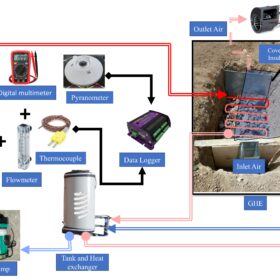
Storing photovoltaic-thermal energy with volcanic tuff stones
Scientists in China have used ground heat exchangers based on volcanic tuff stones to improve storage capabilities and efficiency of photovoltaic-thermal systems. Their experiments showed that the proposed combination effectively improves PV module cooling and thermal efficiency.

EcoFlow launches residential energy management system
At CES 2025, EcoFlow has launched its Oasis energy management platform, which uses AI to optimize home energy consumption, storage, and solar power use.

Hungary approves measures for solar on apartment buildings
Hungary has decided to allow apartment owners to jointly install solar panels and will only permit solar plants equipped with grid-connected inverters from July 2025.

Taiwan maintains solar FITs to support residential PV deployment
Taiwan’s Ministry of Economic Affairs (MoEA) says its feed-in tariff (FIT) for PV systems up to 10 kW in size will be maintained at TWD 5.7055 ($0.17)/kWh, with the aim of further supporting homeowners and small businesses adopting solar.

‘High electricity prices in California have nothing to do with renewables’
Stanford University professor Mark Z. Jacobson spoke to pv magazine about recent research work showing that California could easily rely on a wind-water-solar-dominated large grid. He says the state’s current electricity prices are high because of several reasons that have nothing to do with renewables. These include high fossil gas prices and the cost upgrading aging transmission and distribution lines, among others.
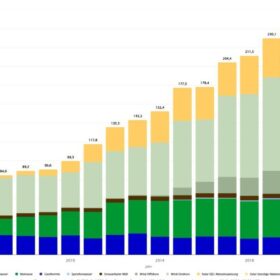
Germany hits 62.7% renewables in 2024 electricity mix, with solar contributing 14%
The Fraunhofer Institute for Solar Energy Systems (Fraunhofer ISE) reports that Germany generated 72.2 TWh of solar in Germany in 2024, accounting for 14% of total electricity generation.
