
Bismuth ferrite, tungsten trioxide thin films for PV cells
Researchers recently identified the optimal laser energy for crafting BFO/WO3 bilayer thin films for solar cells at 200 millijoules (mJ), by carefully considering factors such as leakage and band gap.
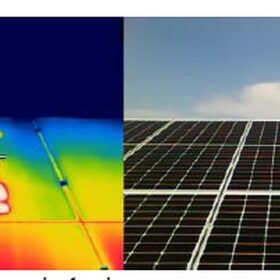
Combination of half-cut, bifacial solar cell designs may contribute to hotspot formation
Scientists in Spain tested PV modules under partial shading conditions, aiming to better understand the formation of performance-damaging hotspots. The study reveals a potential issue particularly affecting half-cell and bifacial modules, which may cause accelerated performance loss and is not covered by current testing/certification standards.
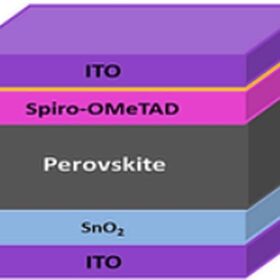
Bifacial perovskite solar cells for indoor applications achieve 30.3% efficiency
Scientists in India have fabricated indoor bifacial perovskite solar cells that purportedly achieve remarkable power output per single cell. The devices also reached a bifaciality factor of 0.73.

Perovskite-silicon tandem tech from Oxford PV tested in solar race car
A team of Dutch university students under the banner Top Dutch Solar Racing has installed perovskite silicon tandem cells in its entry in the 16th edition of Bridgestone World Solar Challenge. The upcoming race is a six day, 3000 km expedition across the Australian continent, from Darwin to Adelaide.

India’s Grew expands solar module capacity to 6 GW
Chiripal Group’s Grew, which currently has 1.2 GW of solar module capacity, is adding 4.8 GW of new production lines.
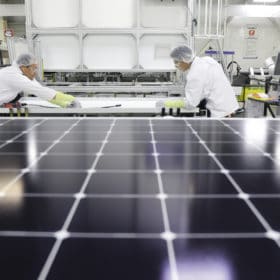
Maxeon Solar Technologies to slash 15% of global workforce
Solar panel producer Maxeon Solar Technologies will lay off 750 employees by the end of the year as the company reels from reduced shipments from its largest distributed generation (DG) customer in North America and an ‘industry-wide demand slowdown’ in global DG markets.
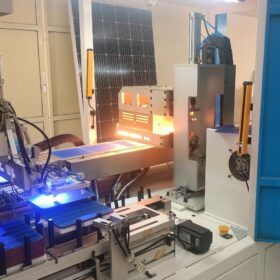
Nigerian manufacturer commissions 100 MW solar panel factory
Auxano Solar has commissioned a 100 MW solar panel assembly factory in Lagos, Nigeria. It launched the project in 2016.
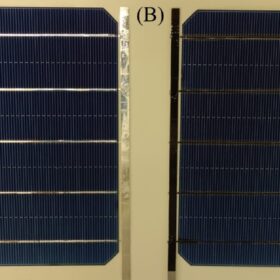
Coating metallic ribbons for aesthetic implementation of BIPV
Researchers in Switzerland have looked into three kinds of black ink coating for metallic ribbons used in PV modules. They have compared their visual stability and their effect on electrical performance.
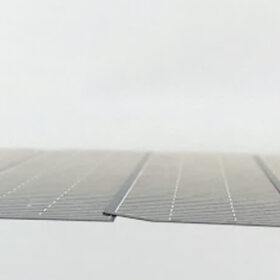
First attempt to build ‘shingled’ perovskite-silicon tandem solar cells
Fraunhofer ISE researchers have demonstrated for the first time the feasibility of the shingling approach with perovskite-silicon tandem solar cells. They also produced full format photovoltaic modules with a power conversion effciency of 22.8%.

Chinese PV Industry Brief: JinkoSolar ships 52 GW in first 9 months of 2023
JinkoSolar says it shipped 52 GW of PV modules in the first nine months of 2023, bringing its total shipments to 190 GW since its foundation.
