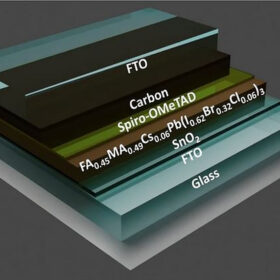
Indoor perovskite PV solar cells with 32.0% efficiency
Scientists in Thailand built an indoor perovskite solar cell with low-cost carbon electrode architecture. The manufacturing process is based on antisolvent deposition and vacuum thermal annealing (VTA) and reportedly results in higher perovskite film quality.
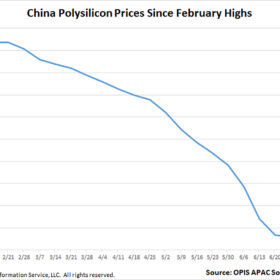
China polysilicon prices hold steady amid rebound talk
In a new weekly update for pv magazine, OPIS, a Dow Jones company, provides a quick look at the main price trends in the global PV industry.
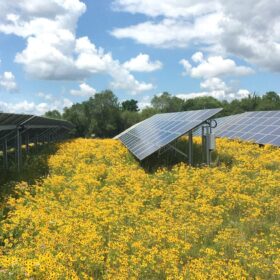
US government offers $45 million for pilot production of PV components
Funding from the US government’s “Investing in America” agenda is intended to support silicon component manufacturing and the development of dual-use PV technologies.
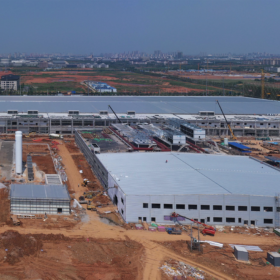
GCL-Si set to start production at 20 GW of solar cell factory in China
GLS-Si has invested CNY 8 billion ($1.1 billion) in a new cell factory in Wuhu, China. It said manufacturing activities will start in August.

New study finds growing inequality in metal footprints of renewable power value chains
A US-Chinese research team has investigated the flow of iron, copper, aluminum, and other precious metals from source to end-use destination in the renewable energy infrastructure value chain. It found significant imbalances that can be attributed to the continuous outsourcing of metal demand for the renewable power sector to developing economies.
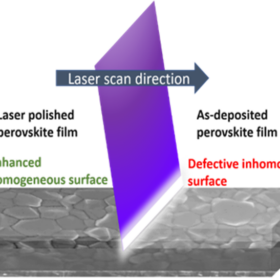
Commercial laser treatment to boost perovskite solar cell performance
European scientists used a nanosecond pulsed ultraviolet laser to reduce surface defects in perovskite films for solar cell applications. The result is a significant increase in cell efficiency and stability. The new technique may be particularly suitable for roll-to-roll (R2R) production lines.
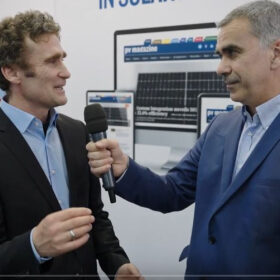
Intersolar 2023: ‘We are working intensively on tandem development’
Jörg Müller, head of R&D for Qcells, recently spoke to pv magazine at Intersolar 2023 about the South Korea-based solar manufacturer’s tech roadmap, the adoption of TOPCon, and the prospects for making tandem perovskite-silicon modules. He said the first tandem products could hit the market by 2030.
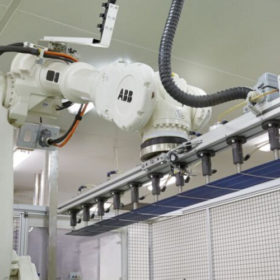
Chinese PV Industry Brief: Hoshine to make solar panels at new 8 GW factory
Hoshine says it will build its first solar panel factory in Jiaxing, China’s Zhejiang province.
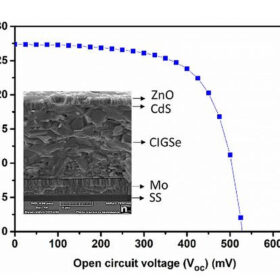
CIGS solar cell using aluminum doped zinc oxide film achieves 9.53% efficiency
Scientists have developed a technique for producing AZO and i-ZnO/AZO bilayer structures in solar cells that greatly improves cell efficiency and durability. Using a low power deposition method that avoids raising the substrate temperature, the team achieved a power conversion efficiency of 9.53% with good transmittance.
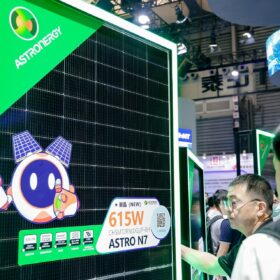
Astronergy announces new TOPCon solar module series
Huang Haiyan, chief sustainability officer for Astronergy, spoke with pv magazine at the recent SNEC trade show in Shanghai about the company’s new TOPCon PV module line and its broader expansion plans.
