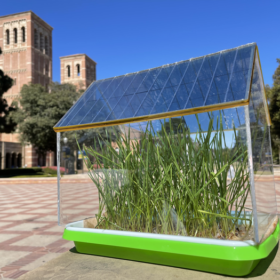
Semi-transparent organic photovoltaics for greenhouse applications
Scientists from the University of California, Los Angeles (UCLA), have used an antioxidant known as L-glutathione as an interlayer in an organic PV cell to prevent other materials from oxidizing. The cell has an efficiency of 13.5% and an average visible transmittance of 21.5%. The researchers said it is suitable for applications in solar greenhouses.
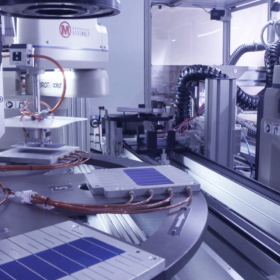
EU wants European PV sector to make 40% of required components by 2030
The European Union is working on a draft proposal, which pv magazine has seen, that would require 85% of the components used in European wind farms – along with 60% of heat pumps, 85% of batteries, and 85% of electrolyzers – to be manufactured on the continent.
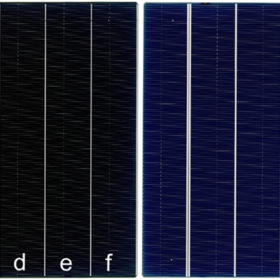
TOPCon shingle solar cell achieves 22.0% efficiency via thermal laser separation
Scientists from Germany’s Fraunhofer ISE and US panel maker Solaria have applied thermal laser separation and post-metallization passivated edge technology to tunnel oxide passivated contact (TOPCon) cell production. They have developed shingle PV devices that are more efficient than cells built with conventional laser scribing and mechanical cleaving methods.
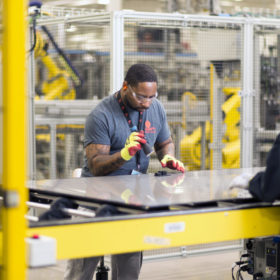
Reviewing the US solar panel value chain
From polysilicon to panels to recycling, how much domestic capacity does the United States actually have?
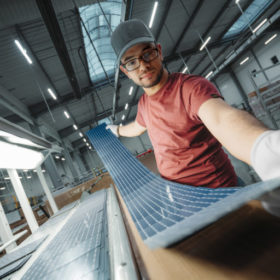
French module maker increases capacity
France’s Systovi is ramping up the annual capacity of its module factory in Carquefou, France. pv magazine France spoke to the company’s general director, Paul Toulouse, about European manufacturing and competition from Asia.
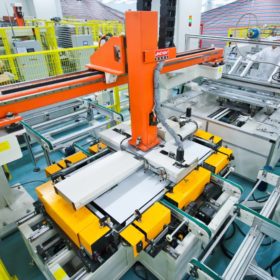
Haitai, Jinchen announce new solar factories in China
Haitai Solar says it wants to build a 3 GW panel factory in China’s Hebei province, while Jinchen has announced plans to expand its PV production equipment capacity in Jiangsu province.
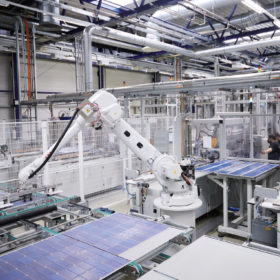
Meyer Burger shifting to 100% glass-glass bifacial panels
Meyer Burger says it will shift all of its manufacturing operations away from plastic.
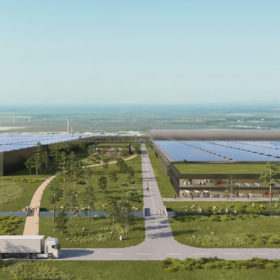
French manufacturer chooses 5 GW solar factory site
France’s Carbon says it has decided to build a €1.5 billion ($1.6 billion) solar production facility in Fos-sur-Mer, France.
Triveni Glass to build solar glass factory in India
Triveni Glass is the latest company in India to venture into solar glass production, following similar announcements by Asahi India Glass, Gold Plus Glass Industry, and Chiripal Group.
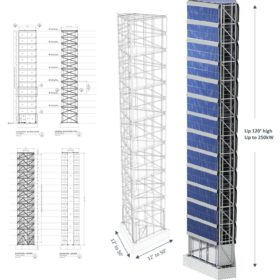
Solar tower of power shows benefits of vertical installations
Three Sixty Solar, a commercial and utility-scale solar developer, published a report this week that provides background on its vertically mounted solar system’s initial 16 months in operation.
