
New way to produce 3D/2D bilayer perovskite solar cells with 24.5% efficiency
US researchers have discovered an appropriate solvent design for the application of a 2D top layer on a perovskite solar cell. The cells incorporate the stability of 2D perovskite cells and the efficiency of 3D cells without destroying the 3D bottom layer, which brings them closer to commercialization.

Australian state announces world’s ‘biggest pumped hydro scheme’
Annastacia Palaszczuk, the premier of the Australian state of Queensland, has launched a new plan to develop what could be the world’s biggest pumped hydro scheme.

Jakson reveals plans to manufacture solar cells, electrolyzers
India’s Jakson Green will expand its solar module and cell manufacturing capacity to 2 GW by the end of 2024, CEO Bikesh Ogra told pv magazine this week at the Renewable Energy India Expo 2022. He said the company also has aggressive plans for green hydrogen and ammonia, with a specific focus on distributed generation.
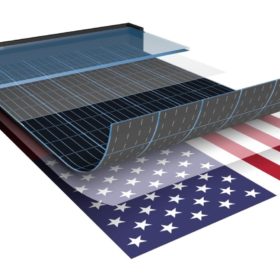
Endurans Solar expands production of Made-in-America solar backsheets
The US Inflation Reduction Act includes more than $60 billion for domestic manufacturing across the clean energy supply chain, incentivizing companies like Endurans Solar to expand domestic production.
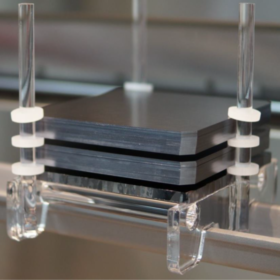
New production process could double wafer throughput to up to 20,000 per hour
Scientists from Germany’s Fraunhofer ISE – together with a consortium of plant manufacturers, metrology companies, and research institutions – have developed a new production line concept for high-efficiency silicon cells, with a throughput of 15,000 to 20,000 wafers per hour – roughly double the usual amount.
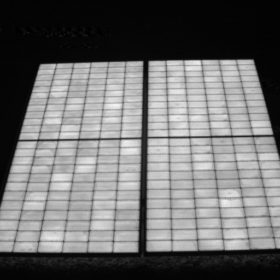
New electroluminescence tech for daily solar module inspections
Enertis Applus+ and the GdS Optronlab Group have developed a system to enable daytime electroluminescence in the inspection of PV modules.

Chinese PV Industry Brief: Trina to build 15 GW solar module factory
Trina Solar plans to build a module factory in Huaian, Anhui province, while polysilicon manufacturer GCL Energy has announced plans to build a manufacturing base in Wuhai, Inner Mongolia.
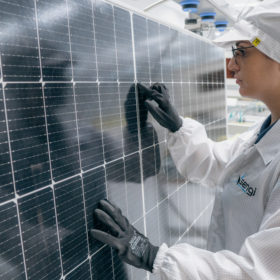
‘Made in Brazil’ solar
Sengi Solar announced a BRL 440 million ($85 million) investment earlier this month to set up two solar panel factories in Brazil. The PV manufacturer recently spoke to pv magazine about the incentives that led to the decision, future technological developments, and its path to 100% Brazilian solar manufacturing.
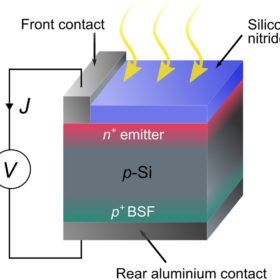
Opto-electro-thermal model to predict solar cell temperature, output
French scientists have developed a fully coupled opto-electro-thermal model that reportedly predicts solar cell behavior under real operating conditions in a standalone framework. They said the model can detect the impact of cell doping on the operating temperature and the temperature coefficient.

Goldi Solar unveils 710 Wp heterojunction PV modules
Indian manufacturer Goldi Solar has unveiled a 710 Wp bifacial solar module based on heterojunction (HJT) technology. The module is built with 132 half-cells and has a conversion efficiency of up to 22.85%.
