
FoxEss unveils compact single-phase inverters for residential PV
FoxEss has released new inverters with nominal power ranging from 0.7 kW to 3.3 kW, a maximum efficiency rating of 97.4%, and a maximum European efficiency of 96.8%. They measure 290 mm x 220 mm x 116 mm and weigh in at 5.4 kg.
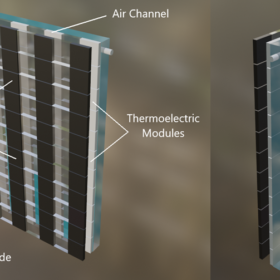
PV-powered thermoelectric cooling for air conditioning in buildings
Scientists have proposed a way to combine thermoelectric modules (TEMs) with rooftop PV to support heating, ventilation and air conditioning in buildings. They designed a wall-integrated TEM to heat and cool adjacent rooms.

Indonesia may add 66 GW of solar by 2030, says IRENA
The International Renewable Energy Agency (IRENA) says that solar could become the backbone of Indonesia’s energy system by 2030. However, the nation’s own expectations are still far off from IRENA’s scenarios.

IBC solar modules may drive TOPCon out of market by 2028, says tech expert
Radovan Kopecek, an expert on interdigitated back-contacted (IBC) tech, says that IBC solar panels could capture more than 50% of the global market by 2030, potentially pushing TOPCon products out of competition. He told pv magazine how this transition might materialize and discussed the tech advancements that could make it possible.
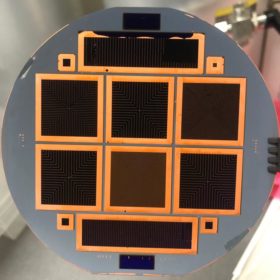
Silicon heterojunction solar cell with 23.83% efficiency via molybdenum oxide hole collector
Dutch scientists have achieved a record-breaking efficiency for a silicon heterojunction solar cell fabricated with a hole collector based on a molybdenum oxide (MoOx). They used plasma treatments to increase the presence of oxygen in the MoOx layer, to improve its electronic properties.

Spain, Portugal to lead renewables in Europe, says Rystad
Norwegian consulting firm Rystad Energy has described the Iberian Peninsula as “a new European energy powerhouse.” It expects Spain and Portugal to reach 79% renewables in their combined electricity mix by 2030.
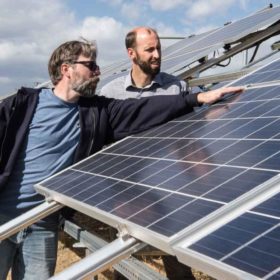
PV modules with longer lifetimes could slash demand for materials, says NREL
The US National Renewable Energy Laboratory (NREL) says in a new report that PV module lifetime extensions should be prioritized over closed-loop recycling to reduce demand for new materials.
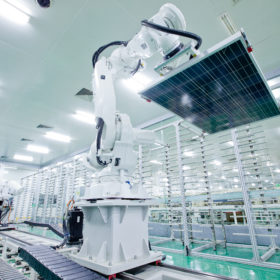
Jinko Solar reports higher sales, profit in Q3
Jinko Solar recorded a higher profit in the third quarter of 2022, as sales of its solar panels surpassed 10 GW. The Chinese PV module manufacturer said it now wants to ramp up production to keep pace with rising global demand.
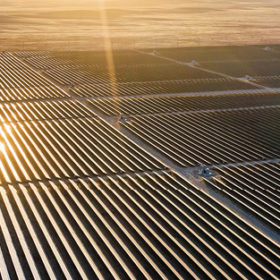
Annual added PV capacity will more than quadruple to 650 GW in 2030, says IEA
The International Energy Agency (IEA) has published its “World Energy Outlook 2022” report. It expects the energy crisis triggered by Russia’s invasion of Ukraine to accelerate the global energy transition.
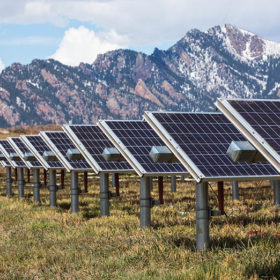
Cooling down solar modules by increasing space between panel rows
A US research team claims to have demonstrated that increasing the spacing of solar panels between rows improves PV system efficiency and economics by allowing airflow to cool down the modules. The method could improve a project’s LCOE by as much as 2.15% in certain climates.
