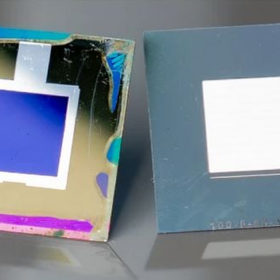
Tandem perovskite-silicon solar cell with 29.80% efficiency via periodic nanotextures
Researchers from Germany have designed a tandem perovskite silicon PV cell that reportedly has lower reflection losses and improved open-circuit voltage. They demonstrated a device with submicrometre-periodic nanotextures and an improved back-reflector design.
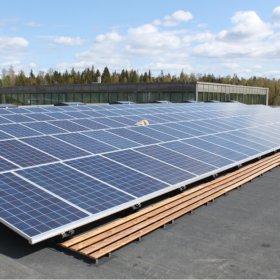
Finland to extend net metering to all PV systems in 2023
At present, only a few distributors offer net-metering services in Finland, meaning that only a small share of PV systems are net-metered. In 2023, all PV systems will be offered net metering through the country’s new centralized information exchange system for the retail electricity market.
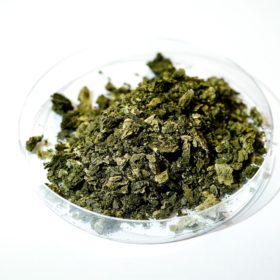
Algae could boost solar panel efficiency by 4%
A Swedish team has inaugurated a pilot facility to mass produce algae material that can potentially boost silicon solar module efficiency by 4% and thin film by 36%. The algae are added to the encapsulant in silicon-based modules or to the anti-reflective coating on the glass of thin film modules. The team estimates the resulting modules would be 3.9% cheaper.

Brazil hits 14 GW milestone in the distributed generation sector
The Brazilian Association of Distributed Generation (ABGD) has announced that the sector reached the 14 GW milestone. Installed capacity grew from 13 GW to 14 GW in just over a month, “the fastest growth ever recorded,” the association claims.
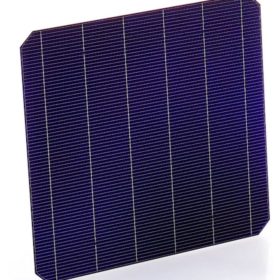
CEA-INES reduces silver consumption in M2 heterojunction solar cell
The French research institute said it was able to reduce the width of the metallization lines of the photovoltaic cells without affecting the efficiency.
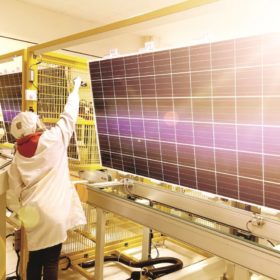
Chinese PV Industry Brief: Canadian Solar starts production of independently developed inverters
The Chinese-Canadian module maker said its new inverters will have a power output ranging from 5 kW to 125 kW. GCL Integration, meanwhile, announced plans to build a 20 GW solar module factory and Longi said it shipped 60 GW of wafers in the first nine months of this year.
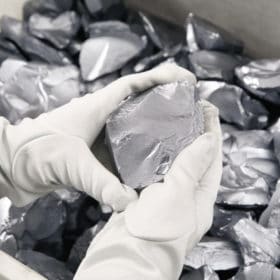
PV InfoLink forecasts polysilicon prices to be halved by end of 2023
The consulting firm expects prices to decline gradually through the first semester of 2023, followed by an accelerated decline in the second half of the year, with prices falling from the current CNY 300 ($36.64)/kg to below CNY 150/kg by the end of 2023. Polysilicon production capacity may increase from 500 GW in 2022 to 975 GW next year.
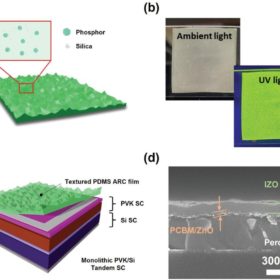
Tandem perovskite-silicon solar cell achieves 23.5% efficiency via novel anti-reflective coating
Korean scientists utilized an anti-reflective coating based on silicon dioxide (SiO2) nanoparticles and large phosphor particles to increase diffuse light transmittance in a tandem perovskite-silicon PV device. The device’s efficiency improved from 22.48% to 23.50%.
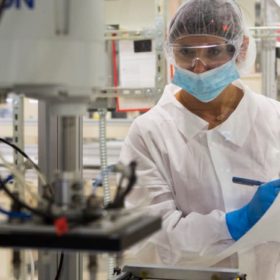
OCI raises capacity of US solar panel factory from 210 MW to 1 GW
OCI said its US unit, Mission Solar Energy, would begin production of M10 PV panels at its Texas manufacturing facility in 2023.
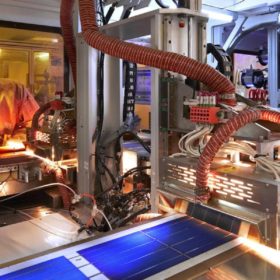
China’s solar cell production capacity may reach 600 GW by year-end
The Asia Europe Clean Energy (Solar) Advisory revealed that most of the planned new solar cell production capacity relates to high-efficiency n-type cell technologies such as TOPCon and HJT.
