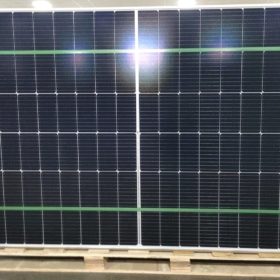
Ifri-Sol launches M10 rooftop solar module
The Tunisian module maker said its new product is based on p-type gallium-doped solar cells and is suitable for both residential and commercial applications. The panel is available in nine versions with nominal power of up to 505 W and an efficiency of up to 21.44%.

Tata Power to build 4 GW solar cell, module factory in India
Tata Power has signed an agreement to invest $380 million to set up 4 GW of solar cell and module production capacity in the Indian state of Tamil Nadu.
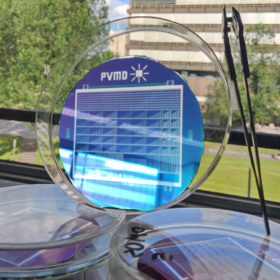
Solar cells integrating power electronics
Researchers in the Netherlands investigated the potential for integrating power electronics in solar cells in the form of diodes, transistors, capacitors, and inductors. They believe that this kind of PV cell may initially find applications in PV-powered Internet-of-Things (IoT) devices and later, as the economy of scale kicks in, in large-scale applications.
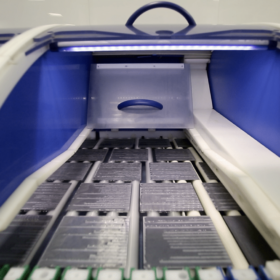
India’s Websol to build 1.8 GW solar cell, module factory
The new manufacturing facility will produce high-efficiency mono-PERC and TopCon panels.
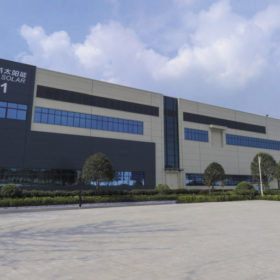
Chinese PV Industry Brief: Big polysilicon deal, new 10 GW solar cell factory
JA Solar has revealed plans to build a 10 GW cell factory in Jiangsu province, while Shuangliang Eco-Energy has agreed to buy 222,5000 metric tons (MT) of polysilicon from Tongwei.

ROTH: US Customs detained solar module shipments under law on forced labor
US Customs and Border Patrol has detained a large shipment of quartzite, a raw material for making polysilicon, from an unnamed Tier 1 solar module supplier.
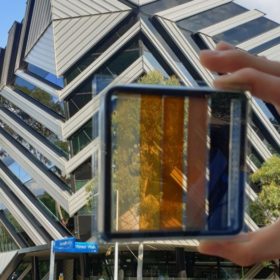
Semi-transparent perovskite solar cell for window applications
Buildings, particularly those with glass facades, are getting closer to self-powering, according to Australian scientists who recently developed a 15.5%-efficient, semi-transparent solar cell that allows more than 20% of visible light to pass through.
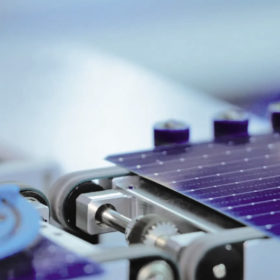
Perovskite-silicon tandem solar cell with TOPCon structure hits 27.6% efficiency
A research group led by Chinese manufacturer JinkoSolar has developed a tandem perovskite-silicon cell with a subcell based on TOPCon tech. The group succeeded in reducing voltage losses in the silicon sub-cell by minimizing the shunting probability during device fabrication.
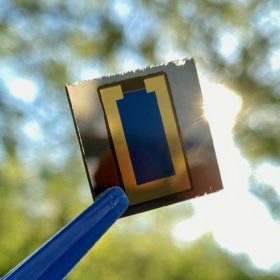
Perovskite-CIS tandem solar cell with 24.9% efficiency
A Dutch-German research team has developed a new PV cell with a certified efficiency of 23.5%, an open-circuit voltage of 1.59 V, a short-circuit current of 19.4 mA cm–2, and a fill factor of 75.5%. It reached maximum efficiency of up to 24.9%, due to the high quality of the subcells.

Glass pyramid concentrator for solar cell applications
Stanford University scientists have built an optical concentrator that purportedly harvests more than 90% of the light that hits its surface.
