
A single solar panel can offset the carbon emissions of 10 trees
Using broad average values of 48.5 pounds of carbon sequestration per year for a mature tree, versus 0.85 pounds of emissions offset per kilowatt-hour of solar electricity, it’s clear that some tree clearing is acceptable from an emissions standpoint.
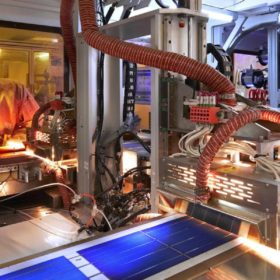
Chinese PV Industry Brief: Trina starts building silicon-to-module factory, Jolywood opens TOPCon cell plant
Trina Solar has started building a silicon-to-module production base in Qinghai province, while Jolywood said it is now producing new TOPCon solar cells in Shanxi province. Tongwei, meanwhile, said it believes that its net profit soared in the first half.
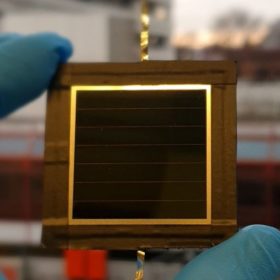
All-perovskite tandem solar panel with 19.1% efficiency
German scientists have developed a two-terminal, all-perovskite solar panel with laser scribing and module interconnections. It has a fill factor of 75%.
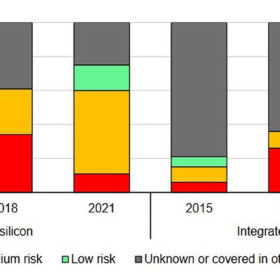
One-third of global PV manufacturing capacity is at medium or high risk of bankruptcy, IEA says
A new report from the International Energy Agency stresses the importance of geographically diversifying the global PV supply chain. This would prevent supply chain vulnerability to bankruptcies and underinvestment.

CSEM, EPFL achieve 31.25% efficiency for tandem perovskite-silicon solar cell
The new world record was independently certified by the National Renewable Energy Laboratory (NREL) in the United States.
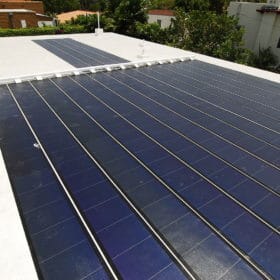
Thin film solar may have carbon intensity advantage over silicon
Thin-film cadmium telluride panels may have a $0.02 to $0.04 per watt carbon cost advantage over traditional polysilicon, said the National Renewable Energy Laboratory in an analysis of embodied carbon, embodied energy, and energy payback.
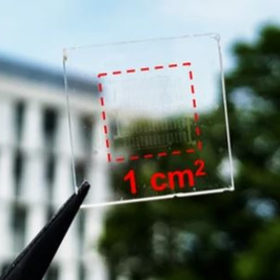
Near-invisible solar cell based on tungsten disulfide photoactive layer
Japanese scientists built a near-invisible solar cell based on indium tin oxide (ITO) and tungsten disulfide (WS2) as a transparent electrode and a photoactive layer, respectively. The cell has the potential to achieve a transparency of 79%.
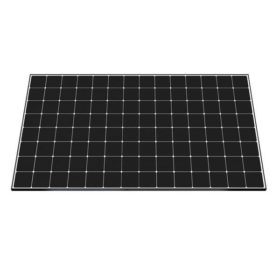
Energy output is over 100 times the input needed to manufacture solar panels
According to a third-party study, the projected output over the 40-year warranty period of Maxeon solar panels exceeds the energy demand of manufacturing them by over 100-fold. Plus, more details from the Maxeon 2021 sustainability report.
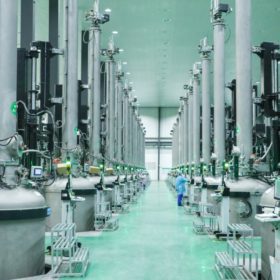
Chinese PV Industry Brief: JinkoSolar commissions 20 GW n-type ingot fab in Qinghai Province
In other news, DAH Solar announced a 5 GW TOPCon solar module factory in Anhui province and Tongwei further raised the prices of its solar cells.
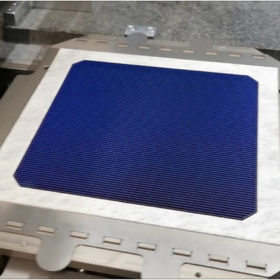
Heterojunction solar cells with lower silver consumption via rotary screen printing
Scientists from the Fraunhofer ISE built a bifacial heterojunction solar cell with a power conversion efficiency of 21.7% via rotary screen printing. They used a machine that is able to achieve a cycle time of just 0.6 seconds per solar cell and enables a strong reduction in silver use.
