
Slovakia’s first solar module factory
Slovak manufacturer Agora Solar is planning to build a 150MW factory in Vranow, in the eastern part of the country. The facility will produce glass-glass panels and may reach a capacity of 500MW by 2024.
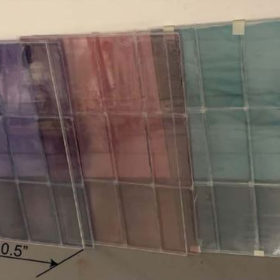
Semi-transparent organic photovoltaic filters for agrivoltaic greenhouses
Researchers in the United States have tested organic photovoltaic filters in a greenhouse hosting lettuce growth and have found the devices’ transmission spectra may help fine-tune the characteristics of the plant. They used transcriptomic analysis to assess the key modifications of the plants grown under the solar filters.
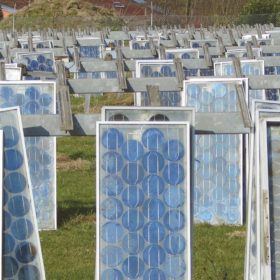
Greening US solar with end-of-life plan
The US Department of Energy’s five-year plan aims to reduce the environmental impacts of solar panels at the end of life, plus cut in half the cost of recycling the panels.

Hanwha Q-Cells says injunction against Longi was extended
According to the Korea-based photovoltaic manufacturer, the court of appeal in The Hague has extended the cross-border injunction against Longi. It now applies in eleven countries in which Longi is not allowed to sell the solar modules affected by the patent litigation, Hanwha Q-Cells states.

Chinese PV Industry Brief: Jolywood, Jinko expand polysilicon capacity
In other news, Canadian Solar revealed it shipped 14.5 GW of solar modules in 2021 and China Power said it installed 1.22 GW more solar generation capacity last year.
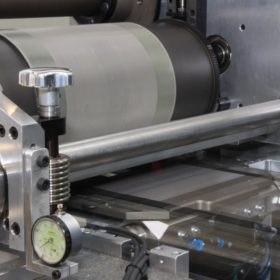
Demonstrator machine for high-throughput solar cell metallization
Developed by Germany’s Fraunhofer Institute for Solar Energy Systems ISE and ASYS Automatisierungssysteme GmbH, the new machine is claimed to increase the print process throughput by a factor of 1.5.
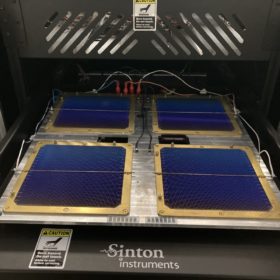
The Solar Tech Check: Toward 50-year modules, and how the numbers add up for HJT
This week sees new technoeconomic analysis published on different aspects/materials for heterojunction: Important to consider as Europe in particular looks to be betting big on this technology for its manufacturing comeback. And a new report from NREL in the United States examines progress in degradation and durability to increase module lifetimes.
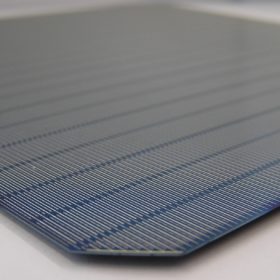
POLO-IBC solar cell with 23.7% efficiency
Scientists in Germany have developed two kinds of solar cells based on n-type doped electron-collecting poly-Si on oxide (POLO) junctions with aluminum-alloyed p+ contacts. Both devices are claimed to be possible upgrades of PERC technologies. The best-performant cell is an IBC device showing a power conversion efficiency of 23.71%, an open-circuit voltage of 711.5mV, a short-circuit current of 41.3mA/cm2, and a fill factor of 80.9%.
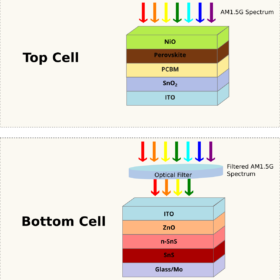
Double-junction perovskite-tin sulfide PV cell design with up to 28.92% efficiency
An Iranian-Italian research group has simulated a double-junction tandem solar cell based on perovskite and tin sulfide. They said that it can reach an efficiency rating of between 22.9% and 28.92%.
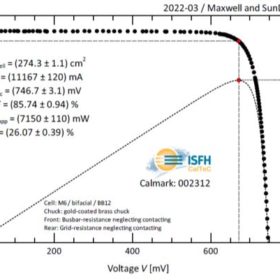
SunDrive sets 26.07% efficiency record for heterojunction PV cell in mass production
Australian solar startup SunDrive has announced “a breakthrough” in mass production-compatible heterojunction technology, after recording an efficiency result of 26.07% with a silver-free, commercial-size silicon solar PV cell.
