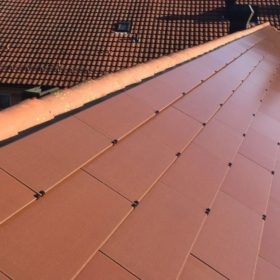
Solar tile with anti-glare coating from Switzerland
Swiss manufacturer Megasol said the new product is compatible with the most common tile formats and also available in different colors. Megasol has also developed a coating that eliminates the glare effect of solar modules.
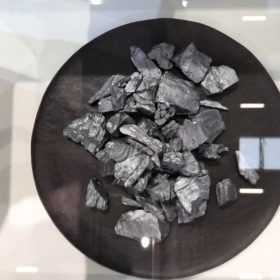
Chinese PV Industry Brief: TBEA wants to set up 400,000 MT metal silicon production
TBEA unveiled a plan to build a 400,000 MT metal silicon factory in Baotou City, in the Inner Mongolia province. Furthermore, EnergyTrend reported polysilicon prices increased slightly this week.
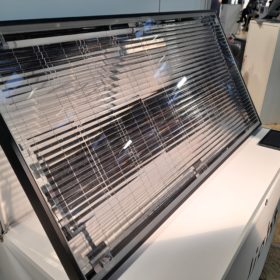
Insolight unveils 20.1%-efficient translucent photovoltaic panel for agrivoltaics
Insolight has developed a translucent monocrystalline solar panel with a nominal power of 106 W and a power conversion efficiency of 20.1%. The solar cells are covered with protective glass and optical lenses to concentrate and direct sunlight onto them at around 100 times the intensity of standard solar glass.

How the numbers may work for 50-year solar
The discounted cash flow from a solar project’s electricity generation increases by 46% when shifting the installation from today’s standard 25-year lifetime to a 50-year time scale.
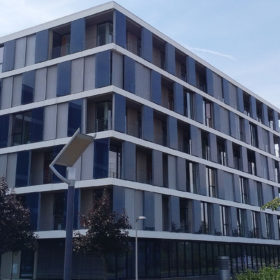
Appeal in Hanwha Q-Cells patent litigation: Penalty payment against Longi Solar and REC confirmed
The Düsseldorf Higher Regional Court, in Germany, has ruled that Longi Solar and REC have to pay a fine because they have not fully complied with the court order to recall their solar modules affected by the patent dispute in Germany.
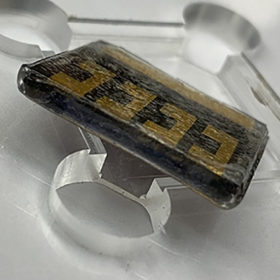
Lead absorbing encapsulant for perovskite solar cells
Scientists in the United States developed what they describe as a ‘scotch-tape like’ solution, which can absorb potential lead leakage from perovskite solar cells, preventing the toxic material from entering the environment. The tape, according to the scientists, can easily be integrated with existing encapsulation strategies, and was shown to absorb 99.9% of lead leaked from cells from that were severely damaged.

OCI reports strong sales growth for polysilicon business
High polysilicon prices helped South Korean supplier OCI to achieve strong results in the third quarter. Tight supply and demand conditions will likely continue until the first half of 2022, the company said.
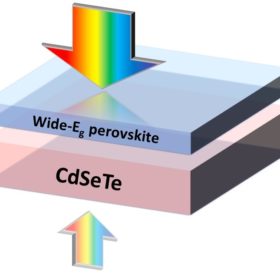
Bifacial tandem perovskite-CdSeTe solar cell with 20% efficiency
Developed by U.S. scientists, the cell is claimed to achieve an equivalent bifacial efficiency of more than 20% with an open-circuit voltage of more than 2 V. The choice of the bifacial architecture is intended at increasing the device’s power yield in order to offset the high costs for producing the CdSeTe sub-cell.
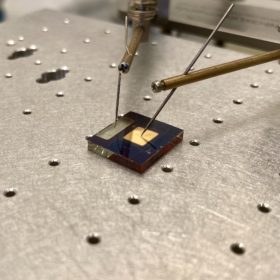
Cadmium sulfide, a poor partner for selenium tandem solar cells
A Danish-German research team has shown that using cadmium sulfide as an n-type partner in heterojunction tandem solar cells based on selenium does not produce satisfying results. The team has discouraged other scientists from following the same path.

Future climate scenarios to adversely affect Australia’s PV capacity
Australia is blessed with an incredible solar resource, but it will be diminished by global warming.
