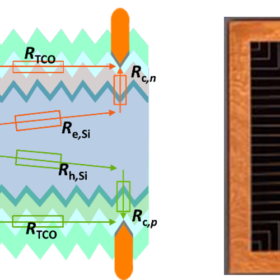
Bifacial heterojunction solar cell with 22.84% efficiency, reduced indium consumption
A Dutch-Chinese research team has developed a bifacial heterojunction PV cell with a 67% reduction in transparent conductive oxide (TCO) use. The TCOs used for the cell are based on indium(III) oxide (In2O3), which is considered a technology-critical element by many experts.
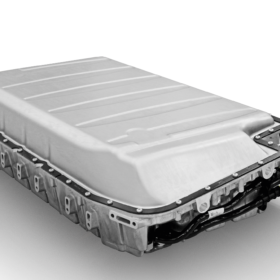
Italian solar park to be linked to 5MW/10MWh of second-life batteries
A unit of Enel plans to deploy 5MW/10MWh of second-life batteries at Rome-Fiumicino International Airport, where a 30MW solar park is now under development. The modular storage system will include different second-life lithium-ion batteries, mainly based on nickel, manganese and cobalt chemistry, with usable storage capacity ranging from 10kWh to 25kWh.
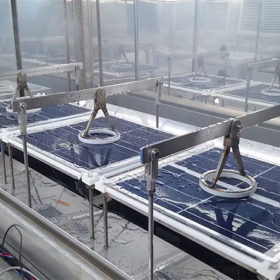
US consortium aiming for 50-year PV
The US Department of Energy’s durable materials consortium is a multi-laboratory unit that stress-tests solar modules for durability. It aims to extend the useful life of PV.

Enphase Energy acquires SolarLeadFactory, a solar sales generation specialist
This is Enphase Energy’s fourth recent acquisition, which enhances Enphase Energy’s planned digital platform for installers.
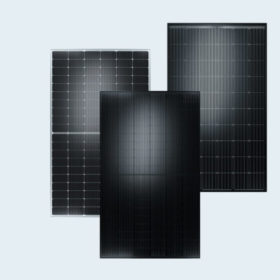
Solarwatt is the first solar module manufacturer enabling carbon compensation
The company’s German customers can buy, together with the modules, CO2 certificates so that the products are completely neutral. According to the manufacturer, the additional costs are about €11 per module.

Chinese PV Industry Brief: Xinte wants to add another 200,000 tons of polysilicon capacity
Xinte’s new manufacturing facility is planned to be located in Changji county, in the Xinjiang Uygur autonomous region. Moreover, Longi is planning to build another factory in Erdos City, Inner Mongolia.
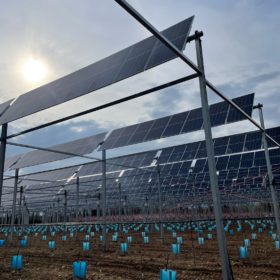
Agrivoltaics for stone fruits
French specialist Sun’Agri is developing a pilot project to combine solar power generation with the cultivation of peaches, apricots, and cherries.
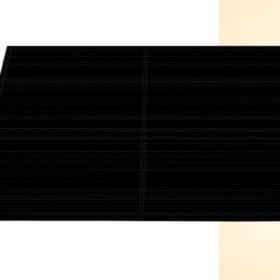
Canadian Solar launches 420W rooftop solar module with 21.5% efficiency
The new product is part of the company’s HiKu6 series based on 182mm wafers. Its temperature coefficient is 0.34% and its electrical characteristics are claimed to be compatible with the most common photovoltaic inverters thanks to current values below 14A.

South African platinum mining company wants to deploy 75MW of hybrid wind-solar
South African platinum miner Sedibelo Platinum wants to deploy a 40MW hybrid wind-solar plant and a 35MW photovoltaic park to power its operations across several sites. The plants will be owned and operated by Sturdee and will supply power to the mining facilities via power purchase agreements.

Czechia allocates $177m for solar rebates
The funds were taken from the country’s National Recovery Plan in an effort to reduce energy dependence on Russia. A call to select eligible projects will be launched on March 22. Solar-plus-storage projects will also be entitled to participate.
