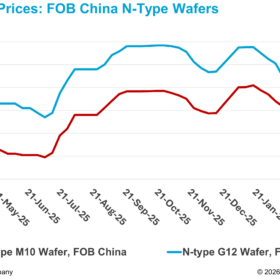
China wafer declines narrow as demand-side regulation lifts market sentiment
In a new weekly update for pv magazine, OPIS, a Dow Jones company, provides a quick look at the main price trends in the global PV industry.
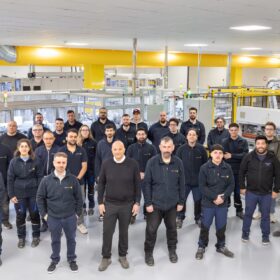
Inside PV Manufacturing: Midsummer’s CIGS factory in Italy
The Swedish thin-film solar specialist produces 50 MW of modules at its Bari facility, using its proprietary DUO system for cell manufacturing. The company says it sources all materials from the EU and other countries in the global North.

EU moves to restrict funding for projects using inverters from high-risk suppliers
The EU is moving forward with a plan to restrict funding for PV projects using inverters from high-risk suppliers, citing cybersecurity concerns and issuing new guidance to phase them out. A transition period applies for certain projects linked to the EU grid, while others must exclude such suppliers by 2027.

Manufacturing partnership brings new PV technology to U.S.-sourced solar
Solx’s Aurora hybrid module with Caelux’s perovskite glass aims to compete on performance beyond federal tax sunsets.
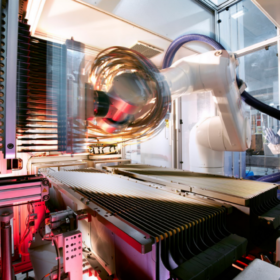
Trina Solar, JA Solar, JinkoSolar launch China’s first PV patent pool for TOPCon technologies
China’s solar industry has launched its first TOPCon-focused patent pool, led by Trina Solar, JA Solar, and JinkoSolar, to streamline licensing, reduce disputes, and strengthen IP coordination at home and abroad.

Rethinking silver paste design for TOPCon, LECO solar cells
Researchers in China have developed an evaluation framework to better assess fine-line silver pastes for TOPCon and LECO solar cells. The approach links laboratory characterization directly with production-line performance, addressing the limitations of conventional evaluation methods.

Maldives’ largest floating solar array goes online
Swimsol says the 2.4 MW floating PV array will supply the resort island of Cheval Blanc Randheli, reducing diesel consumption and saving about $1.5 million in fuel costs. The company’s engineering team told pv magazine how the system will operate.
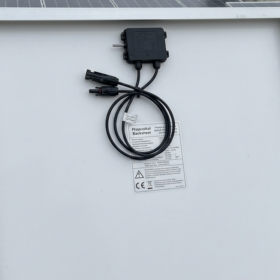
No evidence of PFAS leaching from solar panels, study finds
Researchers in the United States reviewed claims about PFAS in solar panels and found that while fluoropolymers may be used in limited components like backsheets or coatings, there is no confirmed evidence of PFAS leaching from commercially deployed modules. The study highlights widespread confusion between different PFAS types and emphasizes the need for clearer communication and transparency around fluoropolymer use in PV technologies.
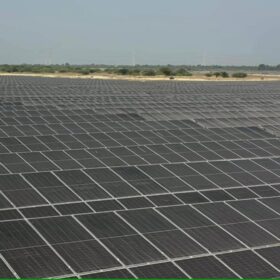
Kosol Energie completes 142 MW solar project for Coal India
Located in the Indian state of Gujarat, the ground-mounted solar plant uses n-type TOPCon bifacial modules based on POE–POE encapsulation technology.
Negative power prices reach all-time high on the Iberian Peninsula in Q1
Spain and Portugal recorded a surge in negative electricity prices in Q1, driven by strong solar generation and relatively low demand on the Iberian Peninsula. Further records are likely in 2026 as solar capacity grows, with more frequent price volatility expected across Europe.
