
Austrian supplier unveils heat pump adaptive to PV, weather, power prices
Austria’s Ökofen has developed a residential heat pump that identifies cost-effective and eco-friendly electricity in real time, in order to optimize heat production. It is now seeking a patent for its proprietary control technology.
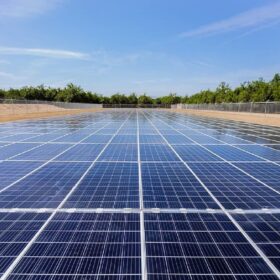
Driving down solar costs key to unlocking green hydrogen future
Jim Tyler, CEO of solar tech specialist Erthos, says that reducing the cost of solar electricity will be needed to unlock the next chapter of the energy transition: a green hydrogen economy.

Chinese PV Industry Brief: Irico to expland solar glass capacity
Irico says it has posted revenue of CNY 1.28 billion ($176.65 million) for the first half of the year, while Daqo has announced a share repurchase program.
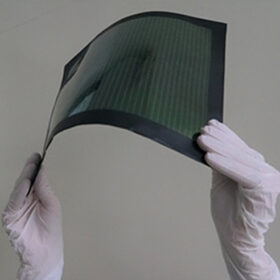
Toshiba claims 16.6% efficiency for polymer film-based large-area perovskite solar module
Japanese electronics giant, Toshiba, is continuing to improve the performance of its perovskite solar cell technology.

El Niño threatens US winter solar generation
In a new weekly update for pv magazine, Solcast, a DNV company, presents that El Niño will likely bring lower than normal solar power production through winter in the United States. Its analysis is based on data collected from previous El Niño events.
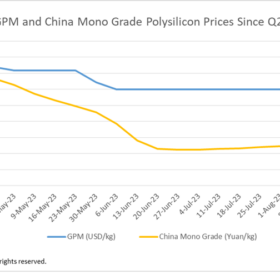
Global polysilicon prices drop, China polysilicon prices rise
In a new weekly update for pv magazine, OPIS, a Dow Jones company, provides a quick look at the main price trends in the global PV industry.
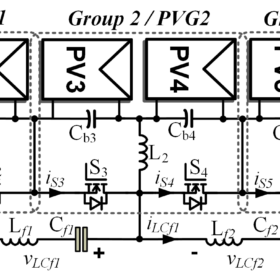
New DPP converter to improve yield in PV systems under permanent mismatch
Brazilian scientists have created a new hybrid converter topology based on differential power processing (DPP) that can help reduce power losses in PV systems under permanent mismatch conditions, as well as temporary ones caused by partial shading, dirt and snow. The converter consists of a hybrid topology that combines the PV-to-PV and PV-to-Bus architectures and reportedly solve some of the issues presented by both configurations.
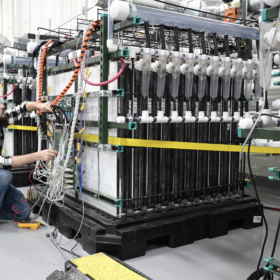
Multi-day energy storage increases grid capacity by factor of 10
Form Energy has released a white paper that provides further evidence that multi-day energy storage, like its iron-air technology, can substantially reduce the costs for New York to achieve its ambitious decarbonization targets.
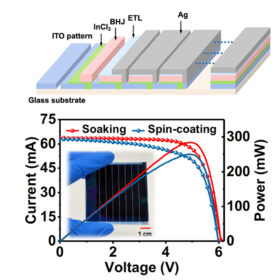
Organic cell based on HTL made of indium chloride layer achieves 18.92% efficiency
Scientists in China have fabricated an organic solar cell based on an indium tin oxide hole transport layer modified with an interfacial layer made of recycled indium chloride (InCl3).

Serbia’s first renewables auction draws lowest solar bid of €0.08865/kWh
The lowest solar bid in Serbia’s inaugural renewable energy auction was €0.08865 ($0.096)/kWh. The exercise is planned to allocate 50 MW of solar and 400 MW of wind power.
