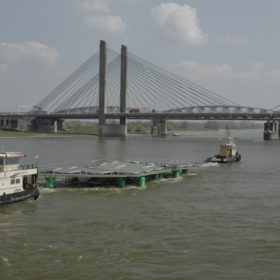
Offshore floating PV platform unveiled in the Netherlands
Dutch floating structure specialist Solarduck has built a pilot 65 kW floating PV array that will be connected to a 10 kW electrolyzer to produce hydrogen bonded with a liquid organic hydrogen carrier. The system is relying on the company’s proprietary floating technology that resembles an offshore oil platform.
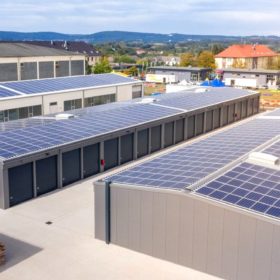
Germany installed 548.6 MW of PV in March
In the first three months of 2021, newly installed solar capacity reached 1.42 GW.

SEIA releases tool aimed at increasing solar supply chain transparency
The document is written to have “universal application” across product lines intended for export to the U.S. market, and is expected to be adopted by equipment manufacturers and U.S. importers.
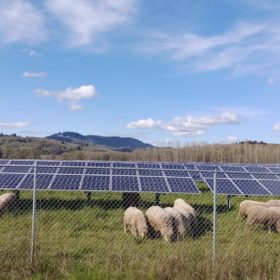
Agrivoltaics increases land productivity, improves animal welfare
New research from the United States has shown the numerous advantages of combining lamb grazing with solar power production. The researchers found, in particular, that the overall return from grazing was the same in both solar pastures and open pasture fields with no PV panels.
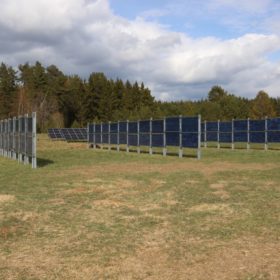
Optimization algorithm for vertical agrivoltaics
Developed by Swedish scientists, the proposed algorithm is said to calculate a project’s ideal design by combining climatological data with figures on expected solar power generation, shading distribution, water for irrigation, and agricultural yield. Its creators spoke with pv magazine about the key parameters that the model seeks to determine, one of which is the optimal distance between the solar module rows depending on the kind of crop.
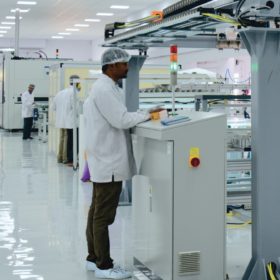
Indian government outlines rules for production-linked incentive scheme
PV manufacturers seeking Indian state funding for new production lines will need to meet minimum scale and module-efficiency requirements, according to new government guidelines.
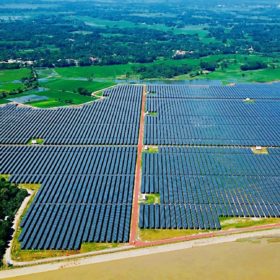
Bangladesh’s largest PV plant comes online
The solar facility will sell power to the Power Grid Company of Bangladesh under a 20-year PPA.
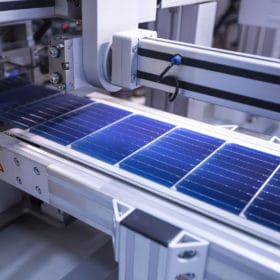
ITRPV: Large formats are here to stay
The 2021 edition of the International Technology Roadmap for Photovoltaics (ITRPV) was published today by German engineering association VDMA. The report, which forecasts technology trends across the solar industry, expects PERC to maintain its position as the dominant cell technology and notes that large wafer formats are here to stay.
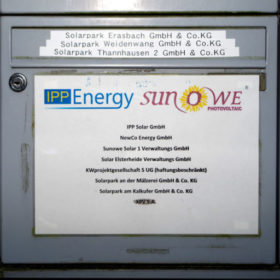
Sunowe’s panel-smuggling trial to resume in Germany
Sunowe’s trial over allegations of PV module smuggling is expected to resume on May 4. The company has been accused of not paying €20 million in anti-dumping and anti-subsidy tariffs.

Turkey’s 1 GW PV tender sees lowest bid drop to $0.022/kWh
The first phase of the procurement exercise is expected to be finalized by the end of the week. The record low bid, for Turkey, was submitted for a 10 MW project in the Antalya region, in the sunny southern part of the country.
